


What Is HYROX? 2026 Beginner's Guide to the Indoor Fitness Race
HYROX is a standardized indoor fitness race: 8 rounds of a 1 km run plus one functional workout station, in the same order at every event in the world. Total: 8 km of running and 8 stations. Most beginners finish between 90 minutes and 2 hours. It's built so anyone reasonably fit can sign up, train for it, and have a real shot at finishing - which is the part most people underestimate.
We coach this every week at Primitive Movement x SwoleAF in Garden Grove. Here's the full breakdown.
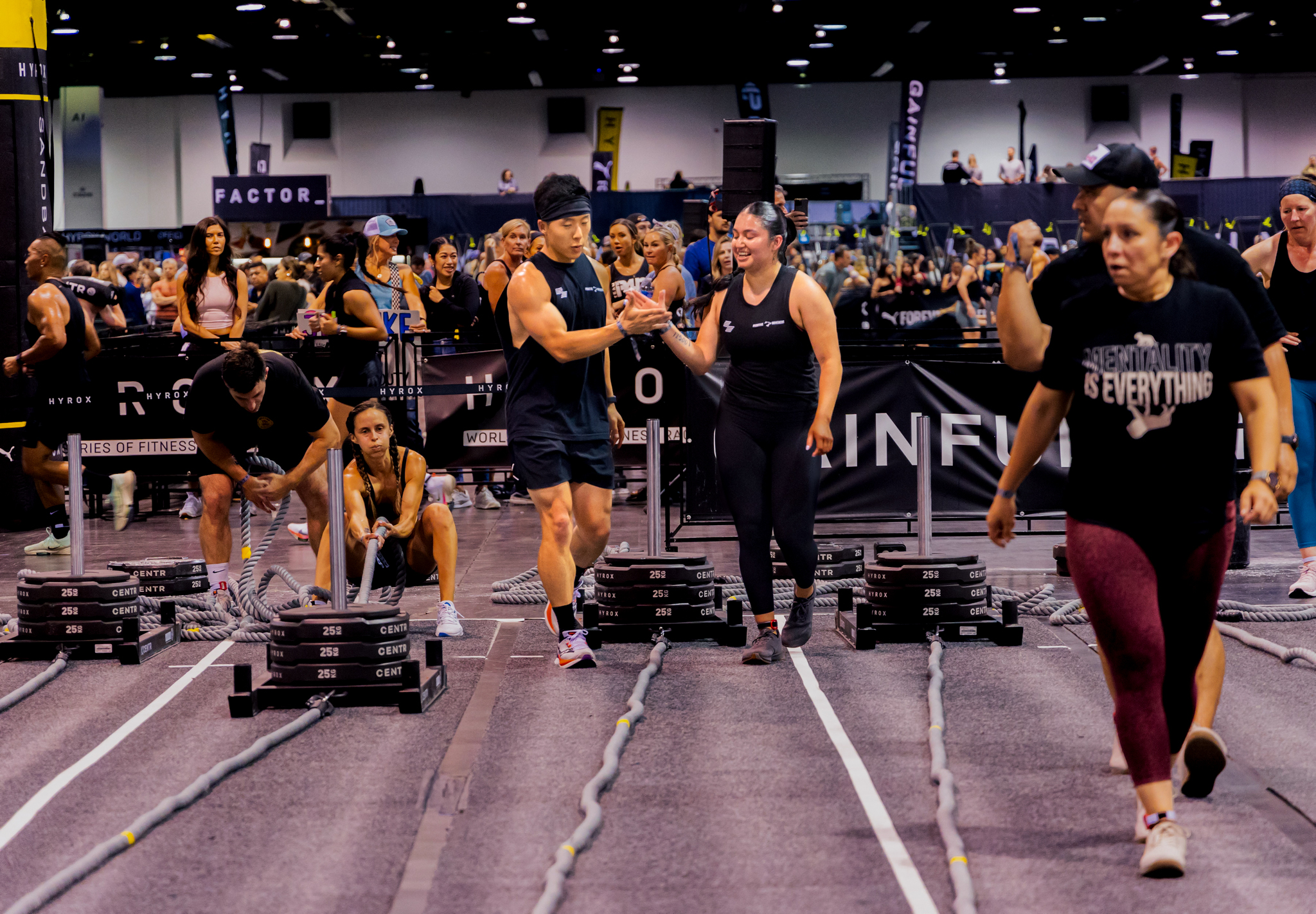
What Is HYROX?
HYROX is an indoor fitness race that runs the same structure worldwide. You run one kilometer, you do one workout station, you do that eight times. The order of stations never changes. Distances never changes. The weights only change based on which division you pick.
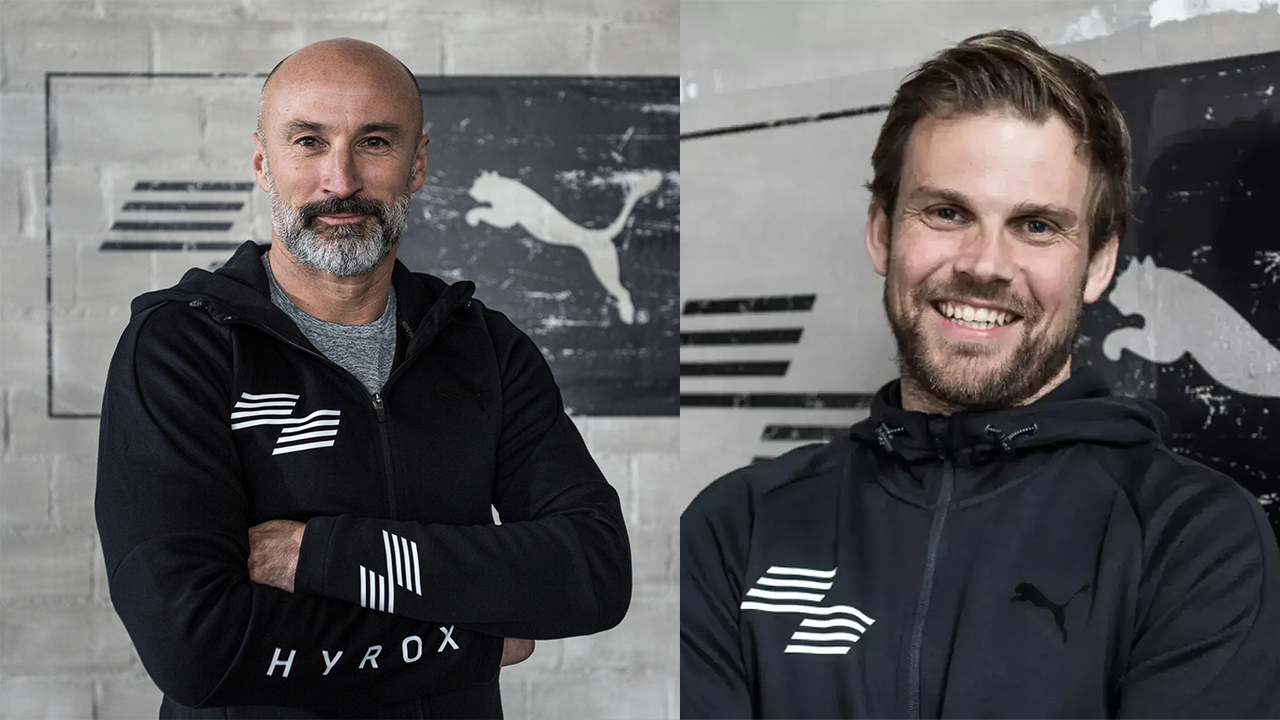
It started in Hamburg, Germany in 2017, founded by Christian Toetzke (former Ironman Germany operator) and Moritz Fürste (two-time Olympic gold medalist in field hockey). Toetzke and Furste saw that there was a void in the fitness industry and wanted to put something together that could be standardized. (interview from hybrid sports media). After multiple tests to see what works, they made it to what it is today.
The first race had 650 athletes. By the 2025-2026 season, HYROX is running events in more than 60 cities with hundreds of thousands of competitors. The 2026 World Championship is in Chicago.
What makes the race different from a CrossFit workout or a Spartan Race is the standardization. A Hyrox time from Anaheim is directly comparable to a Hyrox time from Berlin, Singapore, or Dubai. Same course, same stations, same order. That means your training has a clear, repeatable target - and your results stack on a global leaderboard.
The HYROX Race Format
The structure
Every HYROX race follows this exact pattern:
Run 1 km → SkiErg (1000 m)
Run 1 km → Sled Push (4 × 12.5 m)
Run 1 km → Sled Pull (4 × 12.5 m)
Run 1 km → Burpee Broad Jumps (80 m)
Run 1 km → Rowing (1000 m)
Run 1 km → Farmers Carry (200 m)
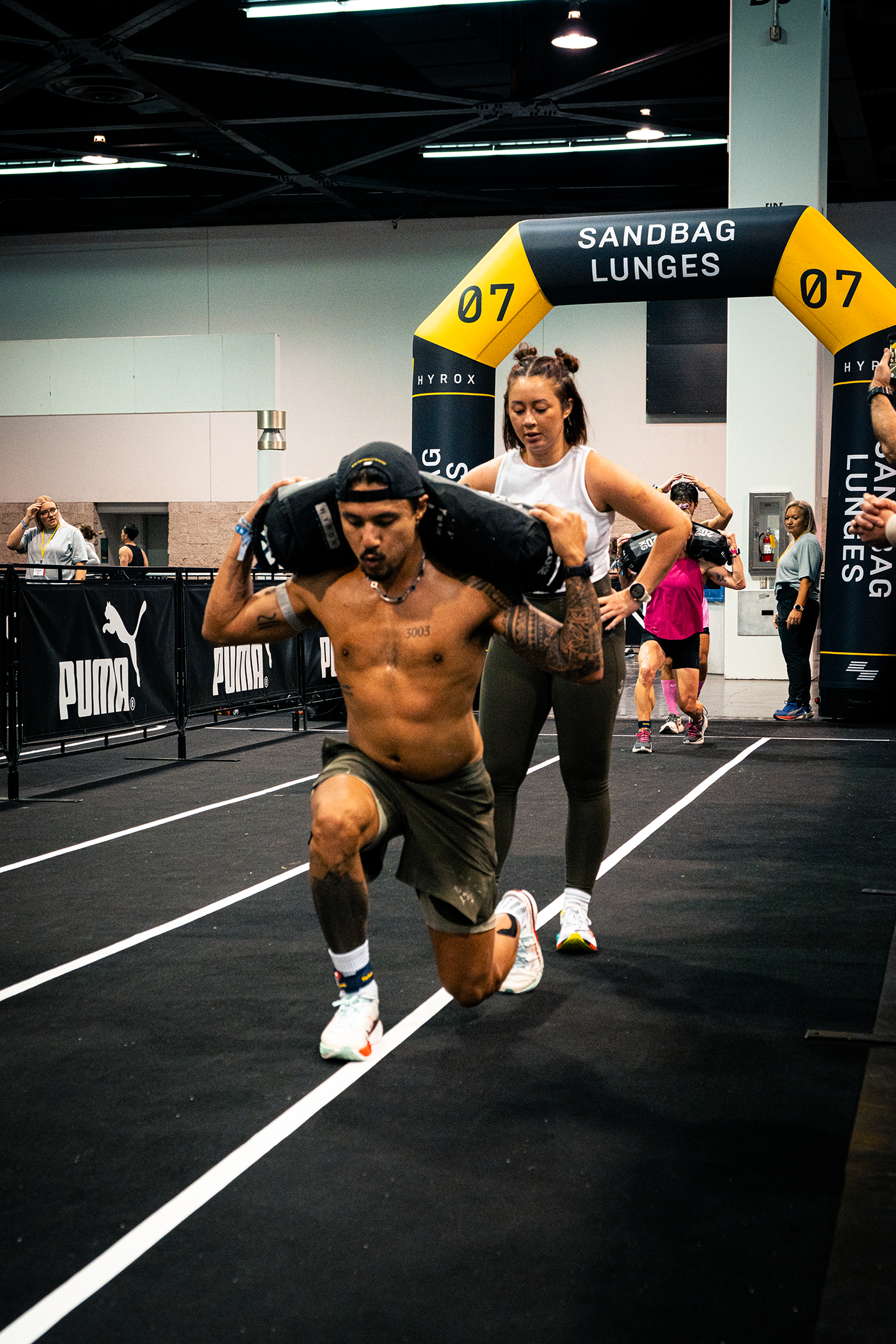
Run 1 km → Sandbag Lunges (100 m)
Run 1 km → Wall Balls (100 reps)
After the final wall ball, the clock stops. No final run.
Between every run and every station, you pass through a section called the Roxzone - the transition area that connects the running lanes to the workout floor. You'll be in the Roxzone sixteen times during your race. Smooth transitions here can save you minutes. Most beginners lose more time fumbling around in the Roxzone than they do at any single station.
There's no time limit. Whether you finish in 55 minutes or 2 or even 3 hours, you get an official time.
The 8 HYROX Stations Explained
The stations always come in the same order. Memorize them. Knowing what's next is half the mental game on race day.
Weights for each station:
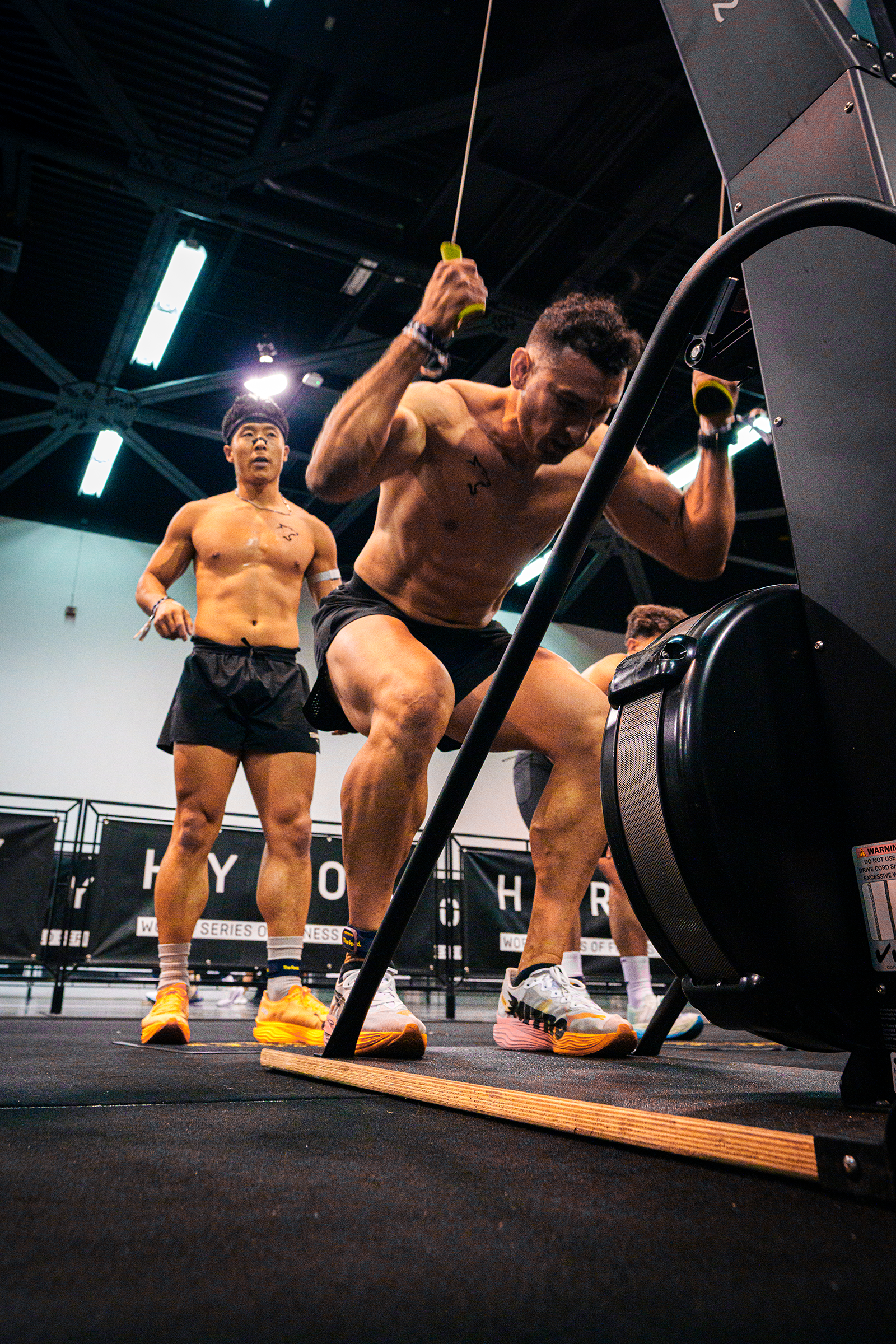
Station 1: SkiErg (1000 m)
A cable-driven machine that mimics double-pole cross-country skiing. Targets lats, shoulders, triceps, and core. Same 1000m for every division.
Beginners Tip: Pacing here is very important. Though you feel fresh, your adrenaline is pumping. Expending too much energy may set you back. Your forearms light up, your running pace may die. Next thing you know, you're already in trouble at Station 2.
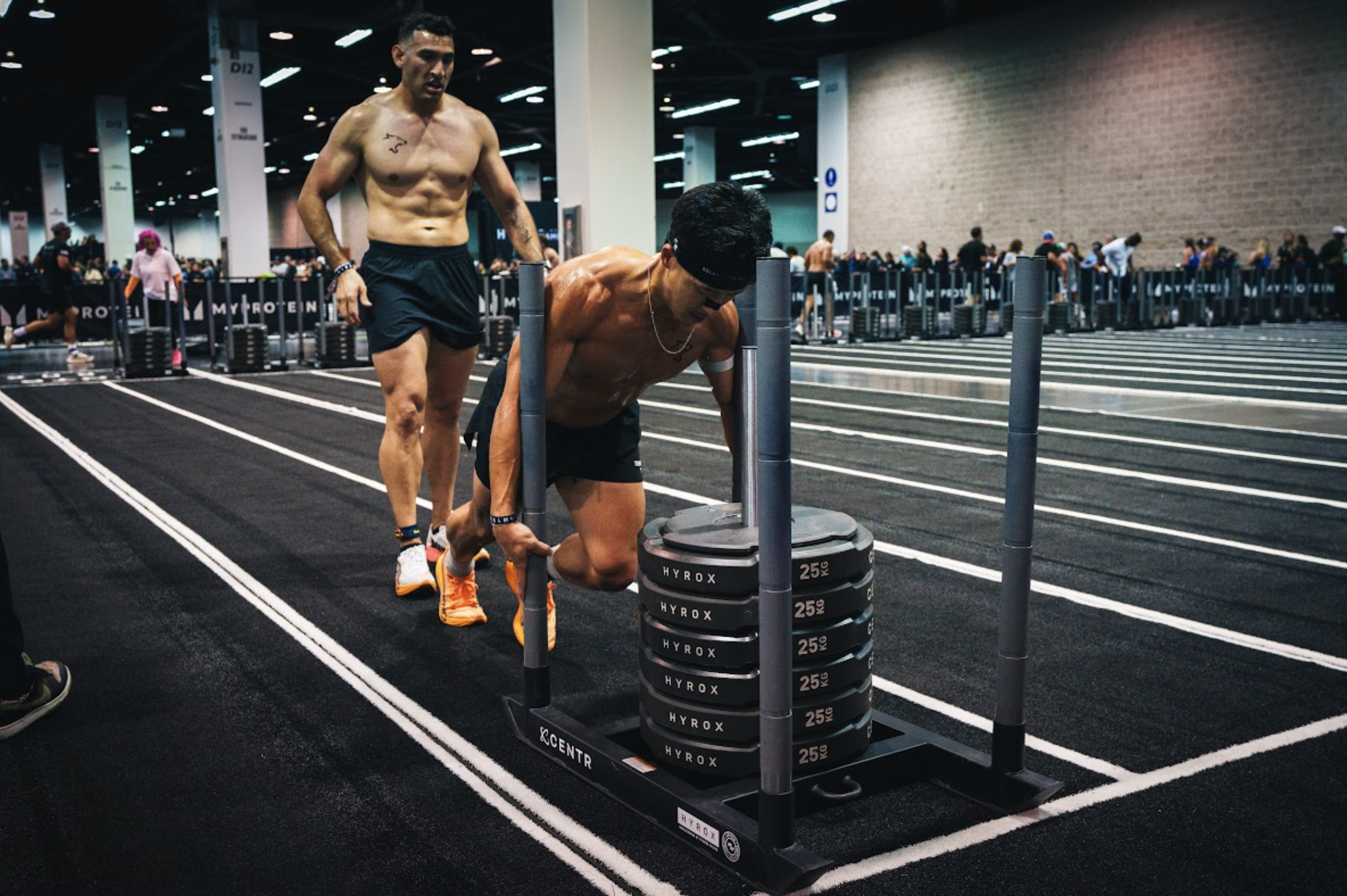
Station 2: Sled Push (4 × 12.5 m)
You push a loaded sled 50 meters total. The weight includes the sled itself.
Open Men: 152 kg
Open Women: 102 kg
Pro Men: 202 kg
Pro Women: 152 kg
Stay low, take short powerful steps, and keep the sled moving instead of forcing huge efforts.
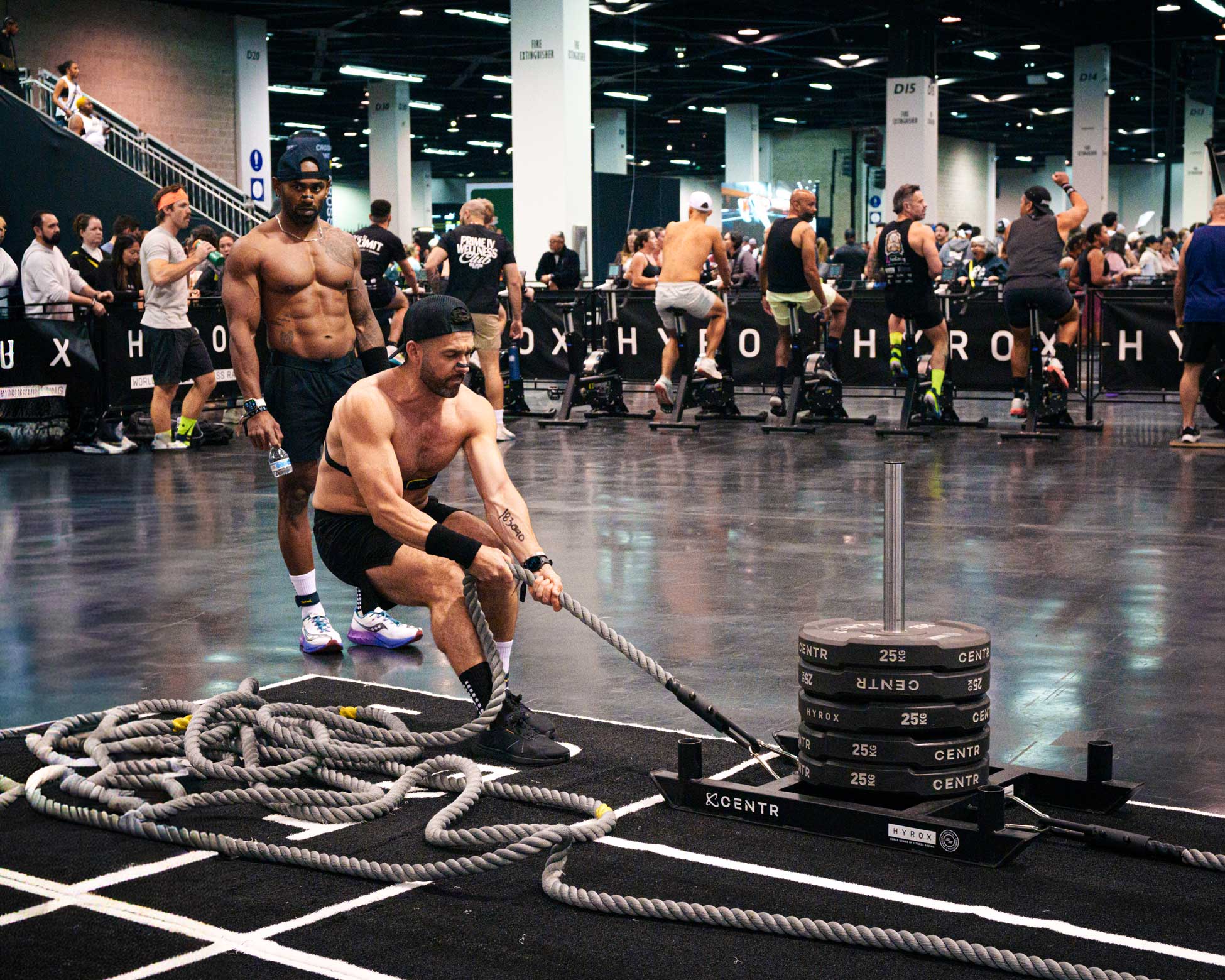
Station 3: Sled Pull (4 × 12.5 m)
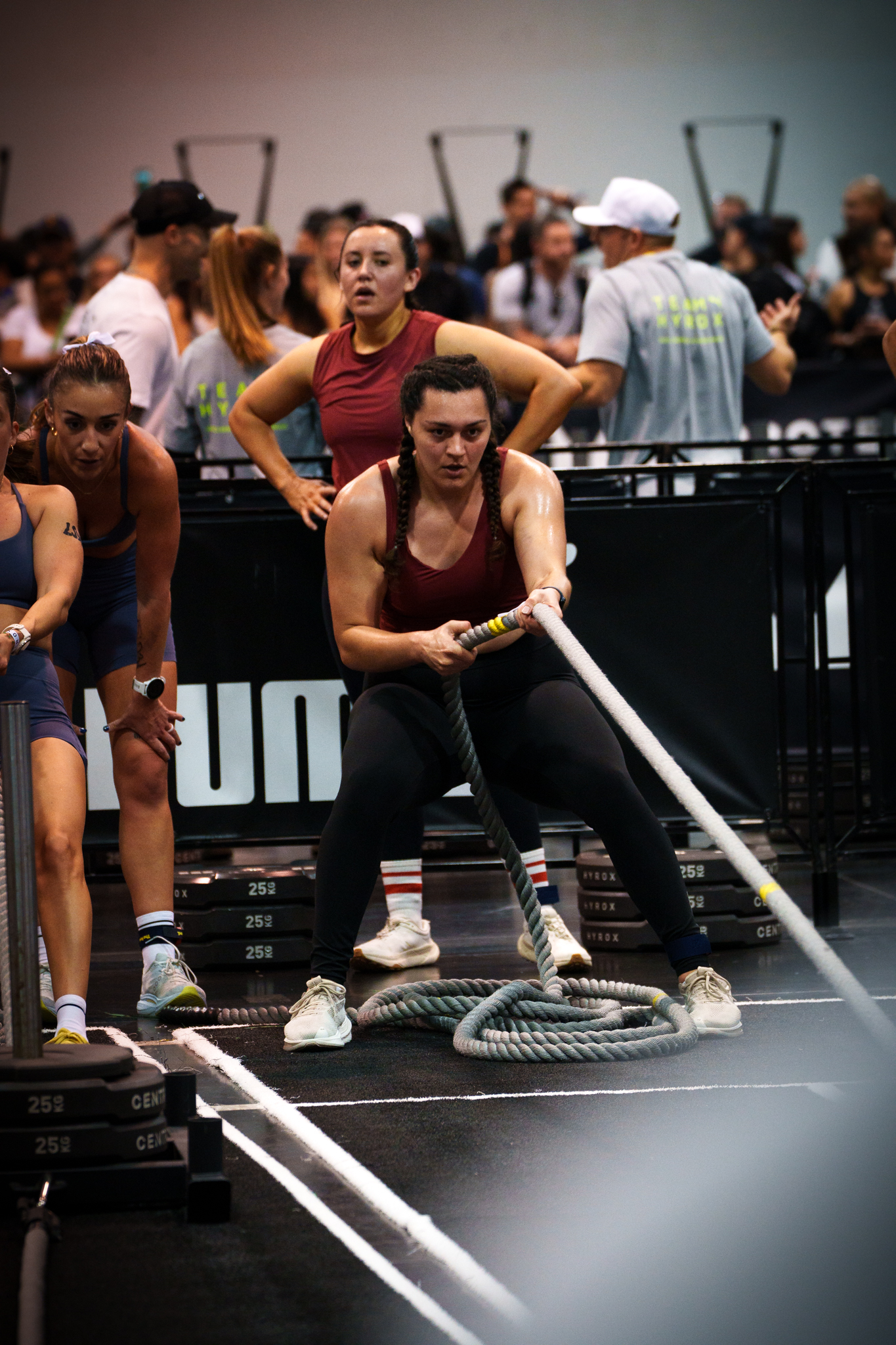
Same sled, lighter load. You pull it 50 meters using a rope, hand over hand or full-body pulls.
Open Men: 103 kg
Open Women: 78 kg
Pro Men: 153 kg
Pro Women: 103 kg
Use steady arm-over-arm pulls and brace your core so you don’t waste energy on each rep.
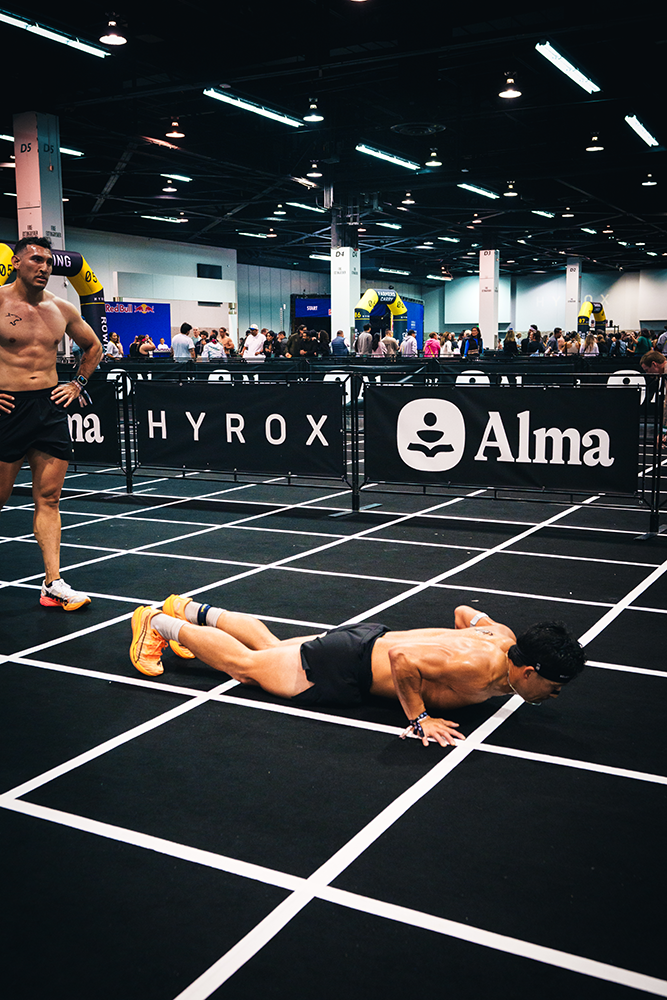
Station 4: Burpee Broad Jumps (80 m)
A burpee followed by a forward broad jump, repeated until you've covered 80 meters. Chest touches the floor, then you jump forward - no stepping. (As of the 2025–2026 season, you can use your knees to stand up. That's a rule change worth knowing.)
This is the station where pacing matters most. Go too hard and your heart rate will be in the rafters for the next two runs.
Keep the jumps short and consistent; big jumps usually look faster than they are.
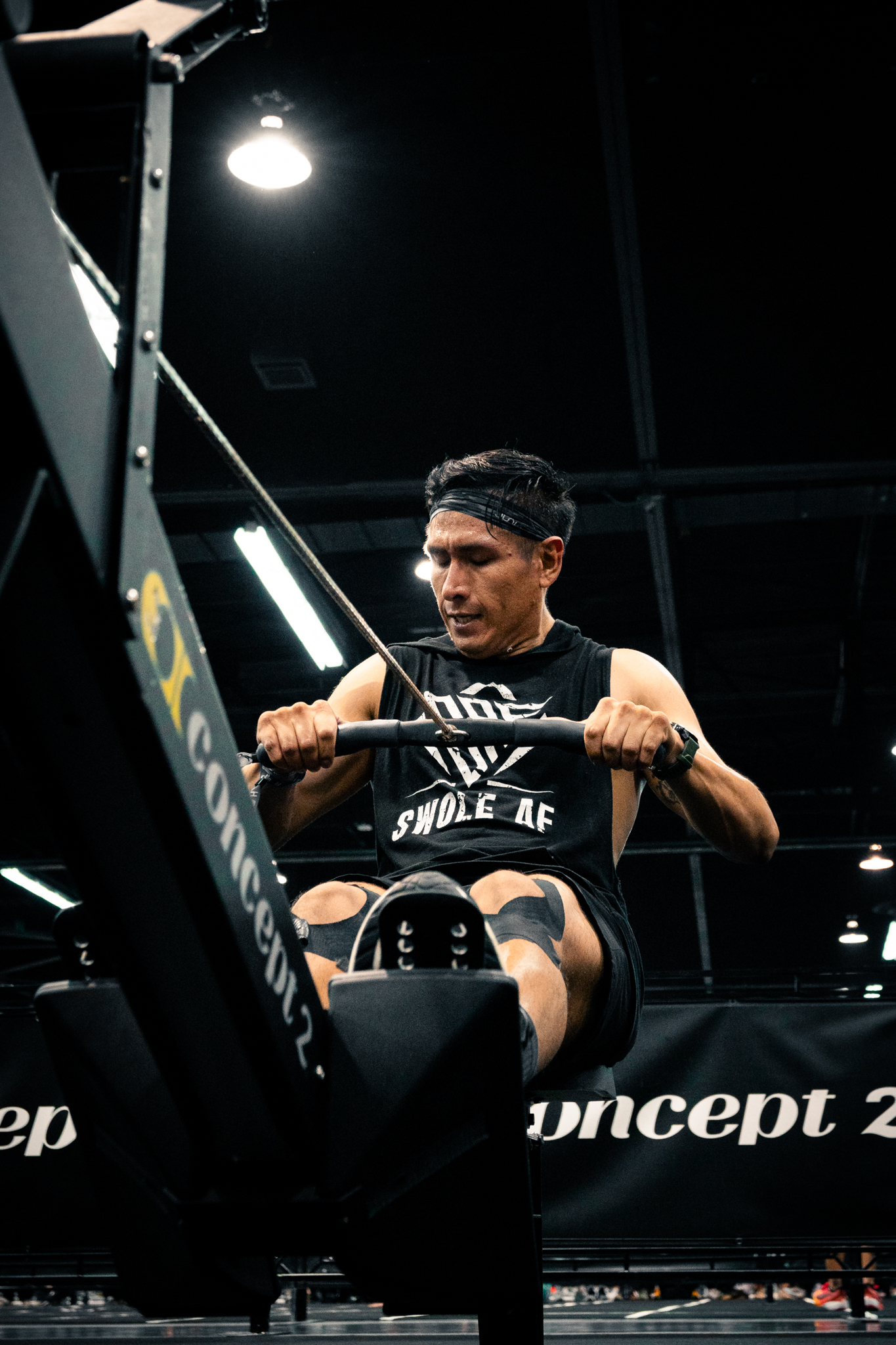
Station 5: Rowing (1000 m)
Start of the back half. Same 1000 m for every division. By now your legs are smoked from sleds and burpees, and rowing is mostly legs.
Row at a steady, manageable pace and use it to control your breathing after the burpees.
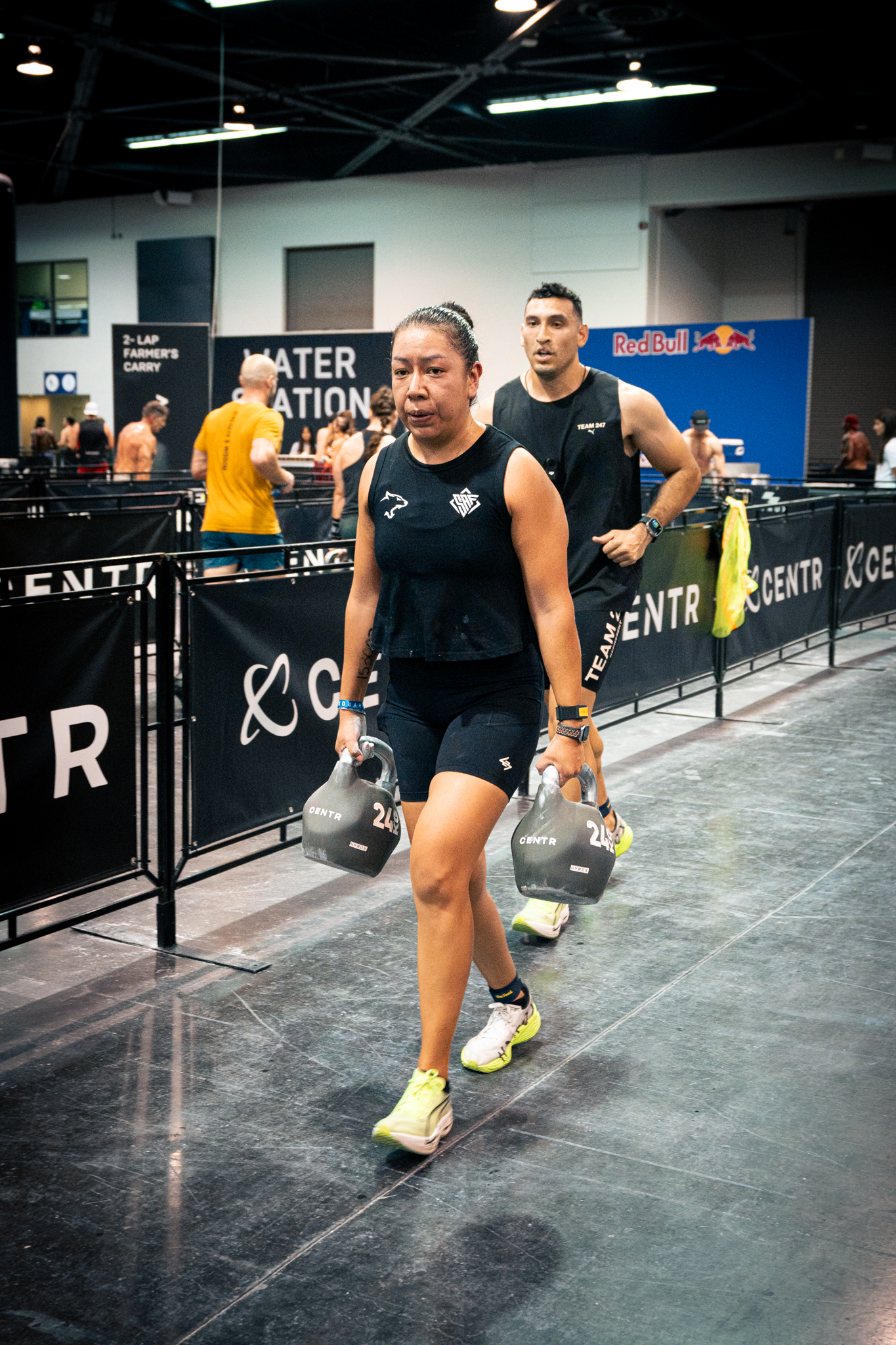
Station 6: Farmers Carry (200 m)
Two kettlebells, 200 meters.
Open Men: 2 × 24 kg
Open Women: 2 × 16 kg
Pro Men: 2 × 32 kg
Pro Women: 2 x 24 kg
Keep the bells low and relaxed, walk briskly, and break grip tension before it turns into a forearm burn.
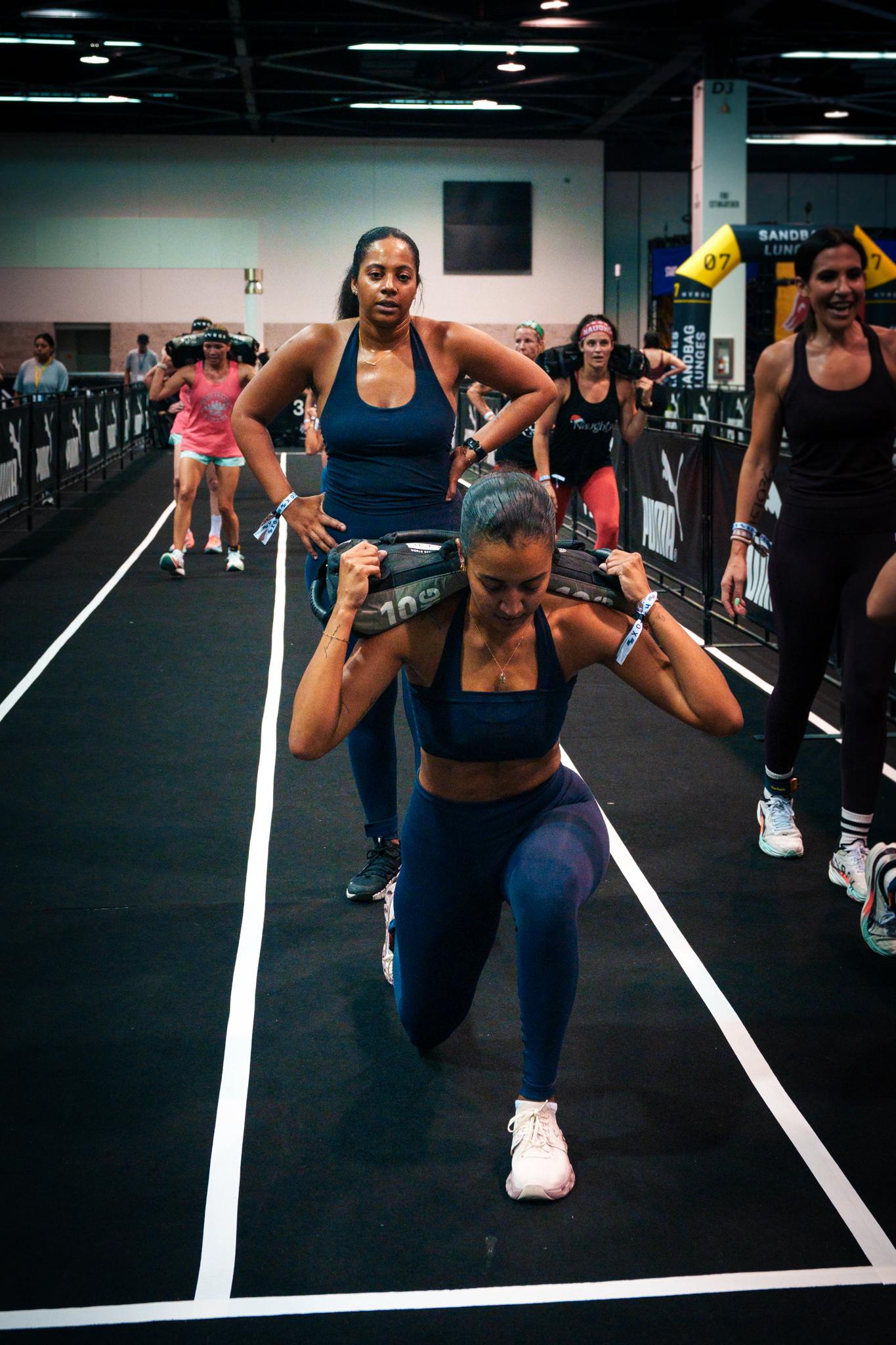
Station 7: Sandbag Lunges (100 m)
A sandbag on your back, walking lunges for 100 meters. Back knee touches the ground every rep. Full standing extension between reps.
Open Men: 20 kg
Open Women: 10 kg
Pro Men: 30 kg
Pro Women: 20 kg
Use controlled steps, stay upright, and take small breaks if needed rather than rushing sloppy reps.
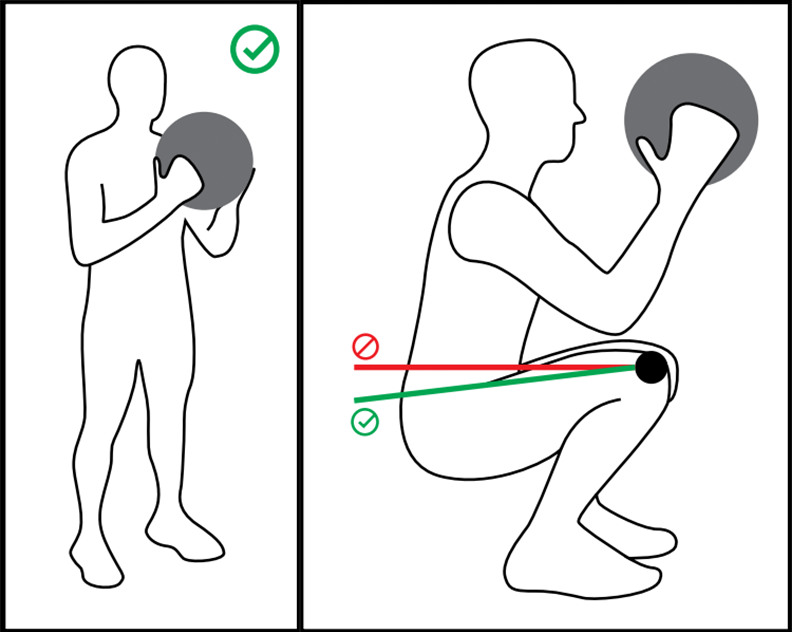
Station 8: Wall Balls (100 reps)
100 wall ball shots to a target. Squat below parallel, ball above the target line, full hip extension at the top.
Open Men: 6 kg ball / 10 ft target
Open Women: 4 kg ball / 9 ft target
Pro Men: 9 kg ball / 10 ft target
Break them into small sets early, breathe every rep, and avoid no-reps by keeping your squat and target clean.
Most people break these up into sets like 25-20-15-15-10-10-5. The judges are strict as it is common for no-reps. When you're under ten reps to go, do not drop the ball - push through and sprint to the finish line. The clock is still running.
Also, for an in depth guide on penalties, see here: Hyrox Competition Penalties
HYROX Divisions: Which Should You Pick?
HYROX runs four main divisions plus an Adaptive division for athletes with disabilities.
Open (Individual)
A full solo race using the Open weight standards - designed for newcomers and recreational athletes who want the complete HYROX experience with lighter loads and the standard 8 x (1 km run + station) format. This division emphasizes balanced endurance and functional fitness rather than maximal strength, making it the most common entry point.
Pro (Individual)
The solo competitive division with the same race structure but heavier loads and stricter standards; intended for experienced athletes with a stronger strength and conditioning background who want a tougher test and faster race times. Pro rewards athletes who can combine higher strength capacity with efficient pacing and technique.
Doubles
Two athletes race side-by-side for the entire event, running every 1 km together and splitting the station work however they choose. Doubles is tactical — teams play to individual strengths (for example, one athlete handling more of the sled work while the other handles carries) — and is a great option if you want teamwork without each person completing the entire workload alone. We wrote a longer breakdown over here: HYROX Doubles: Complete Guide and Strategy.
Relay
A four-person team division where each teammate completes two runs and two stations (the race is divided so everyone contributes a portion of the course). Relay is the most social and accessible format, ideal for gyms or groups looking to experience HYROX together while sharing the workload and atmosphere. Relay teams typically use Open weights.
Adaptive
A supportive category for athletes with permanent impairments, with adjustments and classifications made to allow fair competition based on individual needs. The Adaptive division aims to make the event inclusive while preserving the HYROX format; specifics and accommodations vary by event.
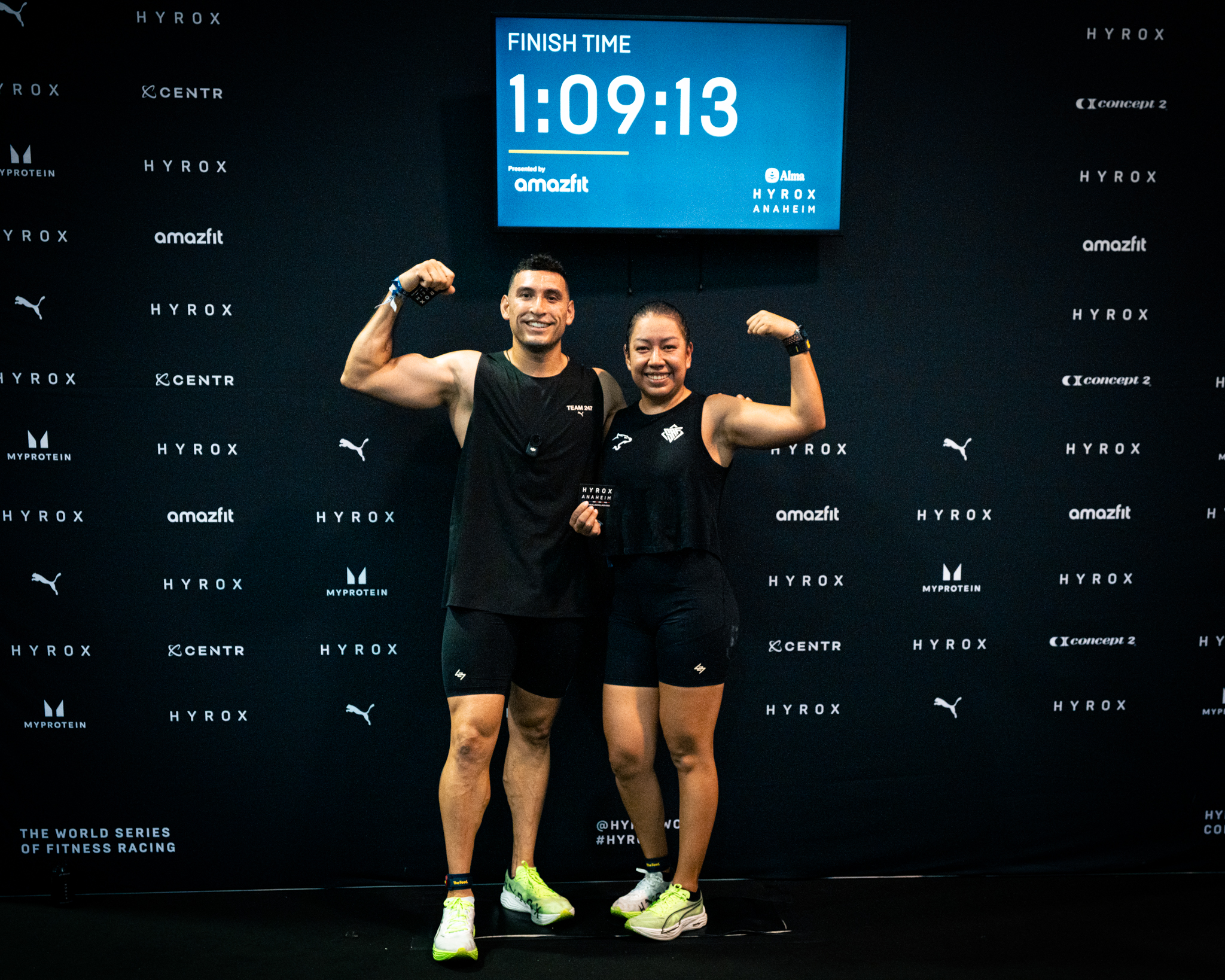
How Long Does a HYROX Race Take?
Times vary widely by division and experience. Rough 2026 standards for Open:
Elite men: under 60 minutes (top 10 globally sit around 54–58 minutes)
Elite women: under 65 minutes (top 10 globally around 60–64 minutes)
Competitive amateur men: 70–80 minutes
Competitive amateur women: 75–85 minutes
First-time finisher: 90 minutes to 2 hours
The current HYROX men's world record sits at 51:59, set by Alexander Roncevic at the Warsaw Major 2026.
What matters more than your finish time is how you feel through the race. A controlled, paced effort almost always beats a fast start that turns into damage control by Station 5.
How Hard Is HYROX, Really?
Most fit people can handle a long run or a heavy lifting session in a day. HYROX asks you to do both, back to back, eight times, while staying efficient and not letting your heart rate run away from you.
The standardized format is what makes it tough to fake. You can't show up and wing it. The race exposes whatever you've neglected - whether that's running, strength, or transitions. Most first-timers underestimate the running. You're running 8 km broken up by full-body strength work. Your splits are going to be slower than your training pace, and that's normal. It's still 8 km.
Pacing is the number-one mistake we see. People hit the SkiErg like they're going to win the race and pay for it for the next 90 minutes.
How to Train for HYROX
You don't need a special program to start. You need three things working together:
Aerobic running base. You need to be able to run 8 km without stopping, at a moderate pace, with an elevated heart rate.
Functional strength. Sled work, lunges, carries, wall balls. The exact movements in the race.
The ability to switch between effort types. This is the one most people skip. Train your strength work after a hard run, not fresh.
A workable weekly structure for someone with 8–12 weeks until race day:
2–3 runs per week (one easy long run, one interval or tempo session, optional third easy run)
2 strength sessions (compound lifts plus HYROX-specific work: sleds, lunges, carries, wall balls)
1 hybrid session (run + station work in sequence)
1 recovery day with mobility or easy walking
Sample HYROX Conditioning Session
Run this as a single workout in any commercial gym:
800 m run
20 wall balls
800 m run
20 walking lunges (weighted)
800 m run
500 m row
800 m run
50 m sled push (moderate load)
This is the exact fatigue pattern of race day. You're not just training the movements. You're training to keep moving when your legs already feel done.
For more sample workouts split up day to day. See: https://info.swoleafgym.com/post/hyrox-training-guide-2026
HYROX vs CrossFit vs Spartan Race
HYROX wins for measurable progress. CrossFit wins for movement variety and community. Spartan wins for outdoor adventure. They're different sports with different appeals - and plenty of athletes train for all three.
What Gear Do You Actually Need?
Not much.
Required:
Indoor-grip training shoes (this matters more than people think — the sleds and turf will punish bad shoes)
Moisture-wicking workout clothes
Photo ID and your race QR code
Recommended:
Anti-chafe stick
Electrolytes for race morning
Light carbs for fueling
Thin gloves for sled pull (optional, but helps the grip stations)
Skip:
Heavy lifting shoes
Compression sleeves you've never trained in
Anything brand new on race day
Wrong shoes will cost you more time than wrong pacing. Pick a shoe with grip for the sleds and enough cushion to survive 8 km on indoor surfaces. If you're looking for the best shoes for hyrox and 2026 see our article here: https://info.swoleafgym.com/post/best-shoes-for-hyrox-2026
Penalties and Rules to Know
Movement standards are enforced strictly. Wall balls need full squat depth and the ball above the target line. Lunges need the back knee touching and full standing extension. Burpees need chest to the floor. You'll get judged in real time, and penalties can also be applied up to 48 hours after the race based on video review.
see full Hyrox Penalties Guide 2026: Here
How to Sign Up
You sign up directly on the official HYROX website. Pick your city, date, and division. Early registration has been selling out in minutes! It's very important to be on the website a couple minutes before ticket release.
You do not need a qualifying time for Open, Doubles, or Relay. Only the World Championship requires qualification.
FAQ
What is a HYROX workout?
A HYROX workout is the race itself: 8 rounds of a 1 km run plus one of 8 functional stations (SkiErg, sled push, sled pull, burpee broad jumps, rowing, farmers carry, sandbag lunges, wall balls), completed in a fixed order. Some gyms also run "HYROX-style" training sessions that mimic the race format with shorter distances and lighter loads.
Can beginners do HYROX?
Yes. The Open division is built for general fitness athletes. If you can run 5 km without stopping and have some strength training experience, you can finish a HYROX. Most people train 8–16 weeks before their first race.
Do you need to qualify for HYROX?
No, for regular events. Open, Doubles, and Relay are open to anyone with an active registration. Only the HYROX World Championships require qualification.
How long is a HYROX race?
8 km of running plus 8 workout stations. Most people finish in 60–120 minutes. Elites go under 60. First-timers typically land between 90 minutes and 2 hours.
Is HYROX better than CrossFit?
Different sports, different goals. HYROX is better if you want a standardized, measurable race with clear preparation. CrossFit is better if you want variety, skill development, and a strong community-based class structure. Plenty of athletes do both.
What's the HYROX world record?
The current men's world record is 52:42, set by Hidde Weersma at the London EMEA Championship.
Can I train for HYROX at a regular gym?
Yes. You need access to a treadmill or outdoor running route, a sled (or something to push), kettlebells, a sandbag (or a weight vest substitute), a wall and a wall ball, and a rower or SkiErg. Most commercial gyms have most of these. HYROX-affiliated gyms have all of them programmed into class.
Train HYROX in Orange County
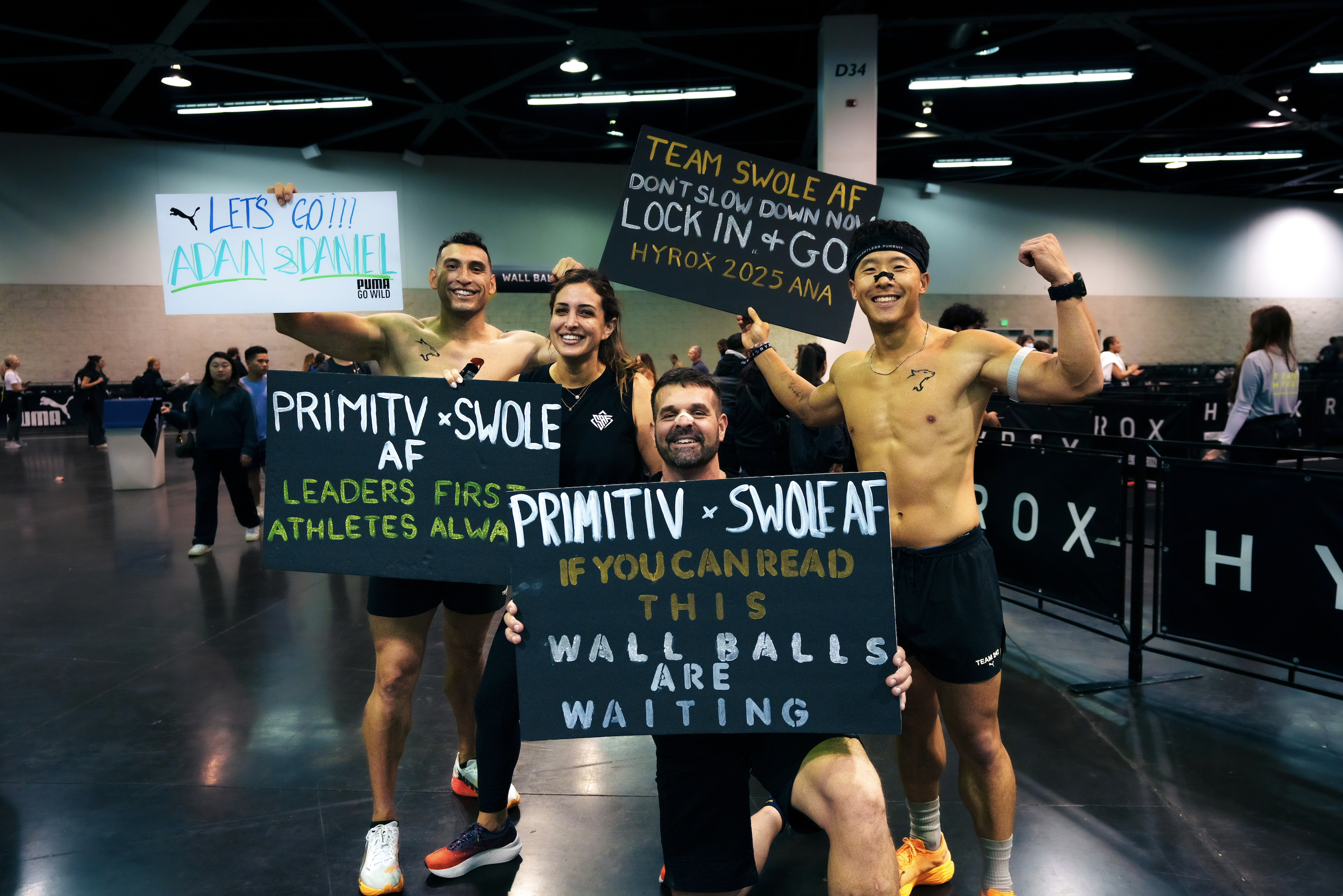
We co-own Primitive Movement x SwoleAF in Garden Grove, CA - a HYROX-focused functional fitness gym. We program HYROX-specific conditioning every week, coach race prep, and run group sessions that simulate the actual race format.
If you're in Orange County and thinking about your first HYROX, the best way to find out if you can handle it is to show up.
Book a Free HYROX Intro Session →
We'll walk you through a scaled version of the race, talk about your training history, and figure out a realistic timeline for your first event.