


Best Shoes for HYROX: 2026-2027 Updated
So here you are.
You've signed up for HYROX. You've told people about it, you've started training.
And now you're here, asking the question that every HYROX competitor eventually arrives at, usually at 2 a.m., surrounded by seventeen open browser tabs:
What are the best shoes for HYROX?
HYROX isn't just running. And it isn't just functional fitness. It's this strange, beautiful, punishing hybrid where you run 1km, then do something challenging, then run another 1km, then do something more challenging, and you repeat this cycle eight times until you cross the finish line.
Here are the shoes that can handle all of it.
Comfort: The Thing That Matters Most
I'm going to start with the most obvious thing in the world, and I'm going to say it anyway, because sometimes the obvious things are the ones we need to hear:
Your HYROX shoes need to be comfortable.
If a shoe meets every other criterion in this article but doesn't feel good on your foot, it's the wrong shoe. Full stop.
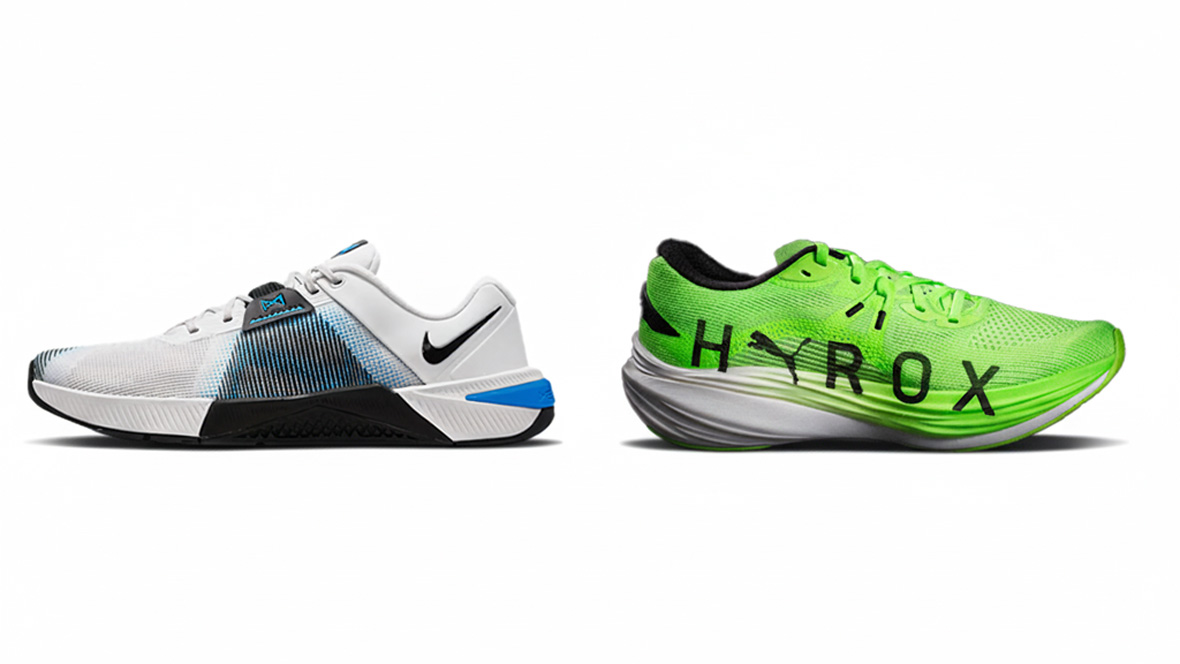
Some of you are thinking: "What about CrossFit shoes? HYROX has functional exercises. CrossFit shoes are made for functional exercises." Unfortunately there are some major differences.
CrossFit shoes like the Nike Metcons or Puma Fuse are not the best choice for HYROX.
They're fine shoes. Good grip. Stable platform. Great for squats and box jumps and whatever else CrossFit asks of you. But they are not built for running 8km+.
Running shoes are what you want. The question is which running shoes.
And here the variables start to multiply. Weight. Heel drop. Rigidity. Bounce. Every runner has preferences, and I'm not going to pretend mine should be yours. But some general guidance:
Weight - lighter is better, but don't lose sleep over a few grams. You're not a hummingbird.
Heel drop - if you're a heel striker (meaning your heel hits the ground first when you run, which is most people), something in the 5–10mm range will probably feel natural.
The simplest test I know: if you'd happily run a 5–10km race in them, that's a good starting point for HYROX.
Grip: A Key Factor
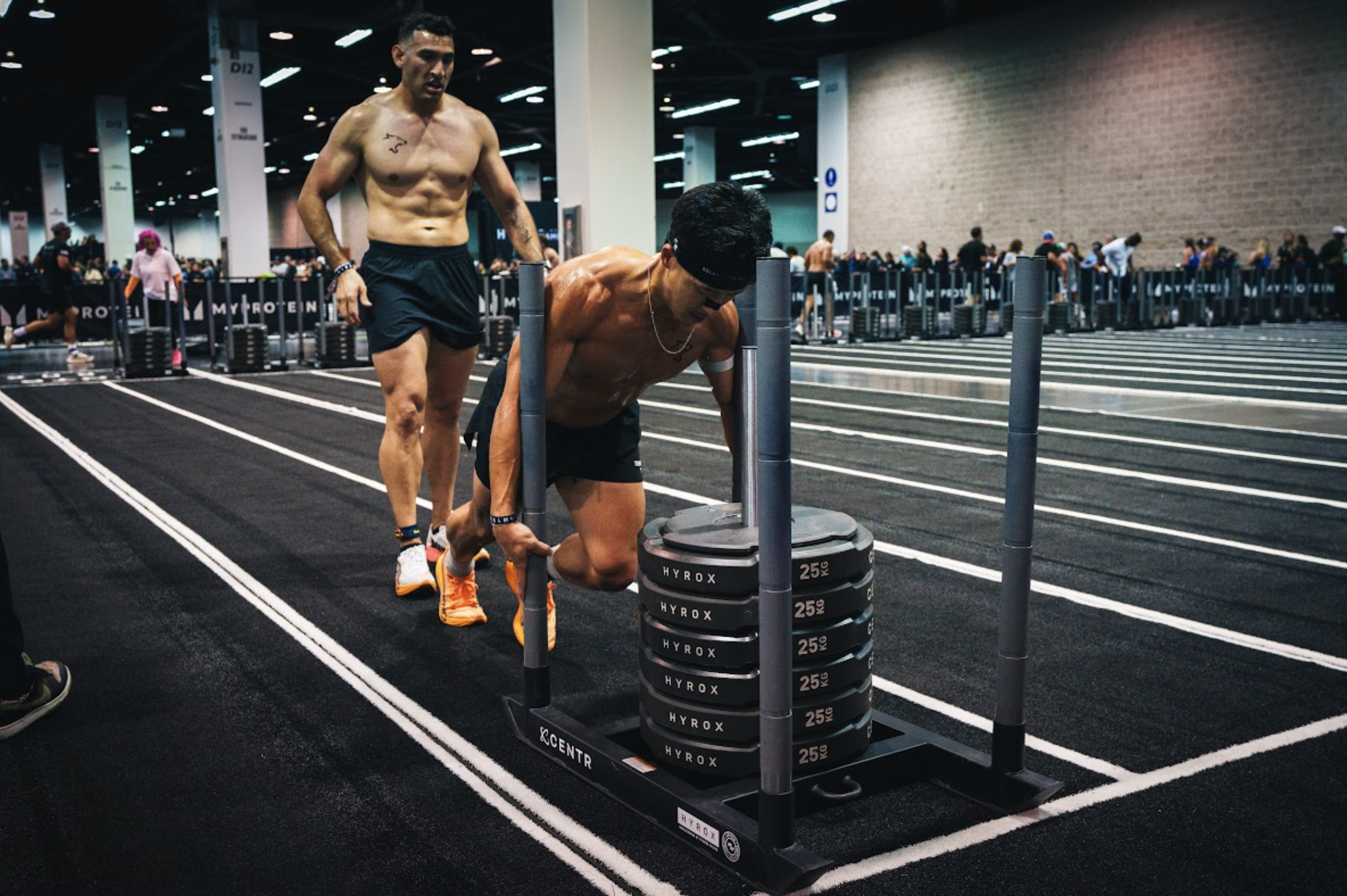
If comfort is the thing that matters most in general, grip is the thing that matters most specifically for HYROX. Because at some point during your race, you're going to have to push a very heavy sled across a carpet. And then, later, you're going to have to pull one.
And if your shoes don't grip that carpet, you'll push, but your feet will slip. You'll push harder. They'll slip more. The sled will barely move.
I've seen it happen. It is not dignified.
This is the single factor that catches out more first-time HYROX competitors than anything else.
So what determines grip? Three things:
Rubber coverage. You need solid rubber on the outsole, particularly from the midfoot forward to the toes. This is the zone making the most contact with the carpet during a sled push. If there's exposed foam or smooth plastic in this area - trouble.
Lug pattern. A completely smooth outsole is a problem. You want some textured ridges that can bite into the surface. They don't need to be aggressive trail-shoe lugs. Even moderate texture helps a lot.
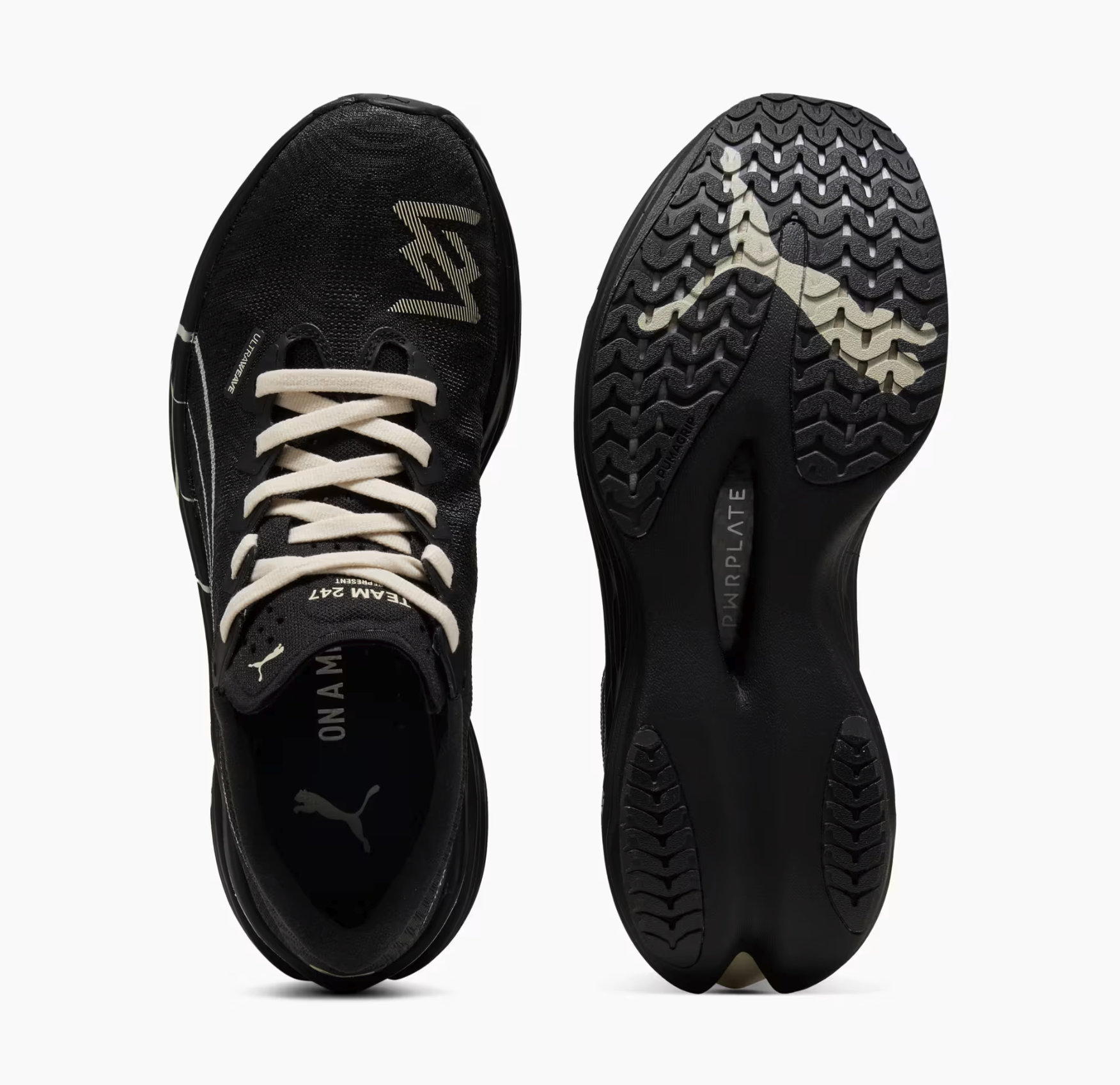
Rubber compound. Not all rubber is the same. Puma's proprietary PUMAGRIP compound, for example, is specifically engineered for multi-surface traction and works remarkably well on HYROX indoor floors. Other brands have their own compounds. The point is: the type of rubber matters, not just the amount.
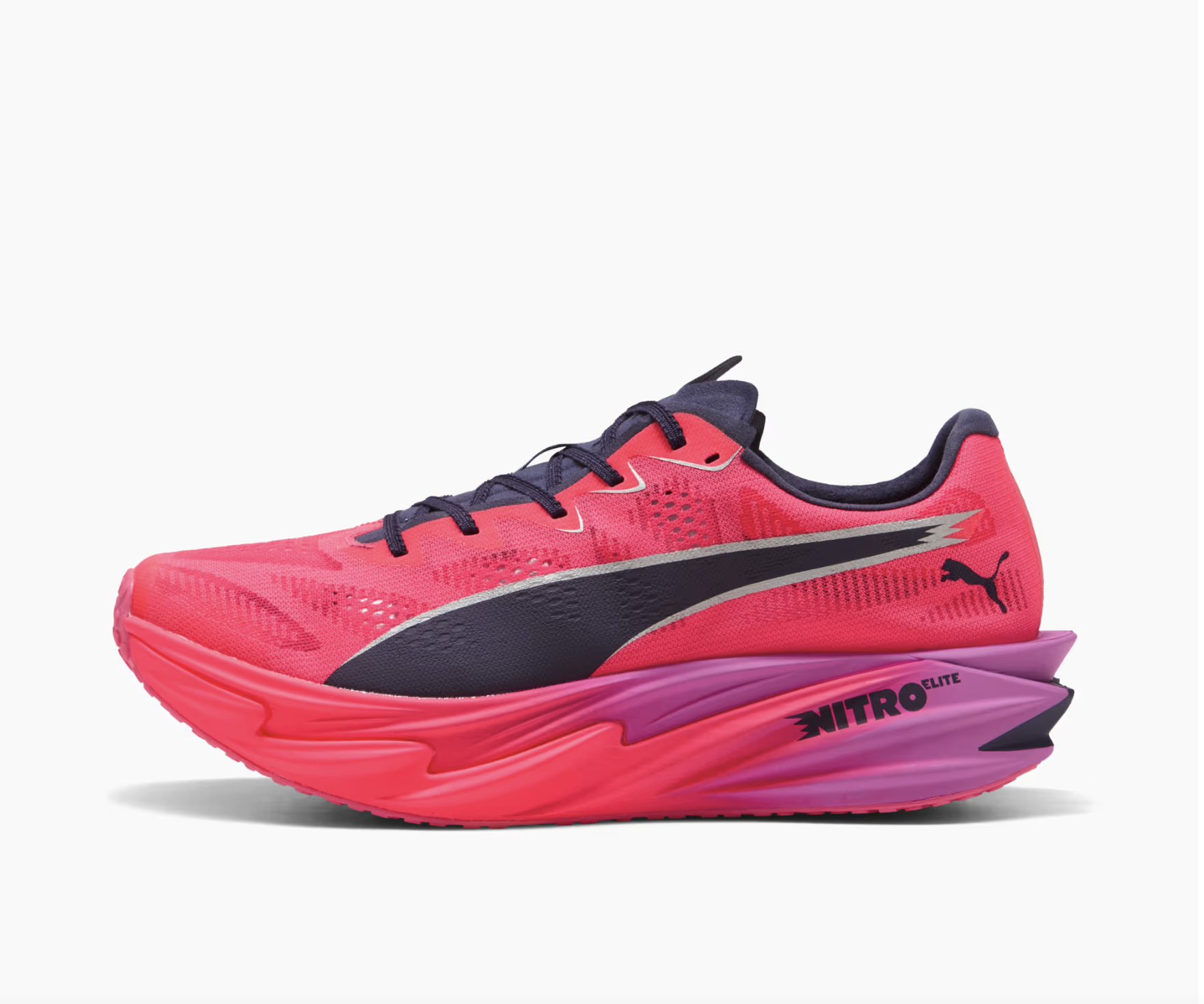
The Puma Deviate Nitro 3 Elite, for example, has excellent outsole coverage with a textured lug pattern that feels completely planted on the sleds. It's one of the grippiest HYROX shoes I've used.
Here's a tip that has saved many a first-timer: if you're unsure about your shoes' grip, test them on a sled push before race day. And - this is important - load the sled heavier than you think it'll be. HYROX sleds feel heavier than training sleds because of the carpet friction, because of the fatigue, and because of a mysterious third factor I can only describe as "the universe testing your character."
Super Shoes: For New Technology & Innovation
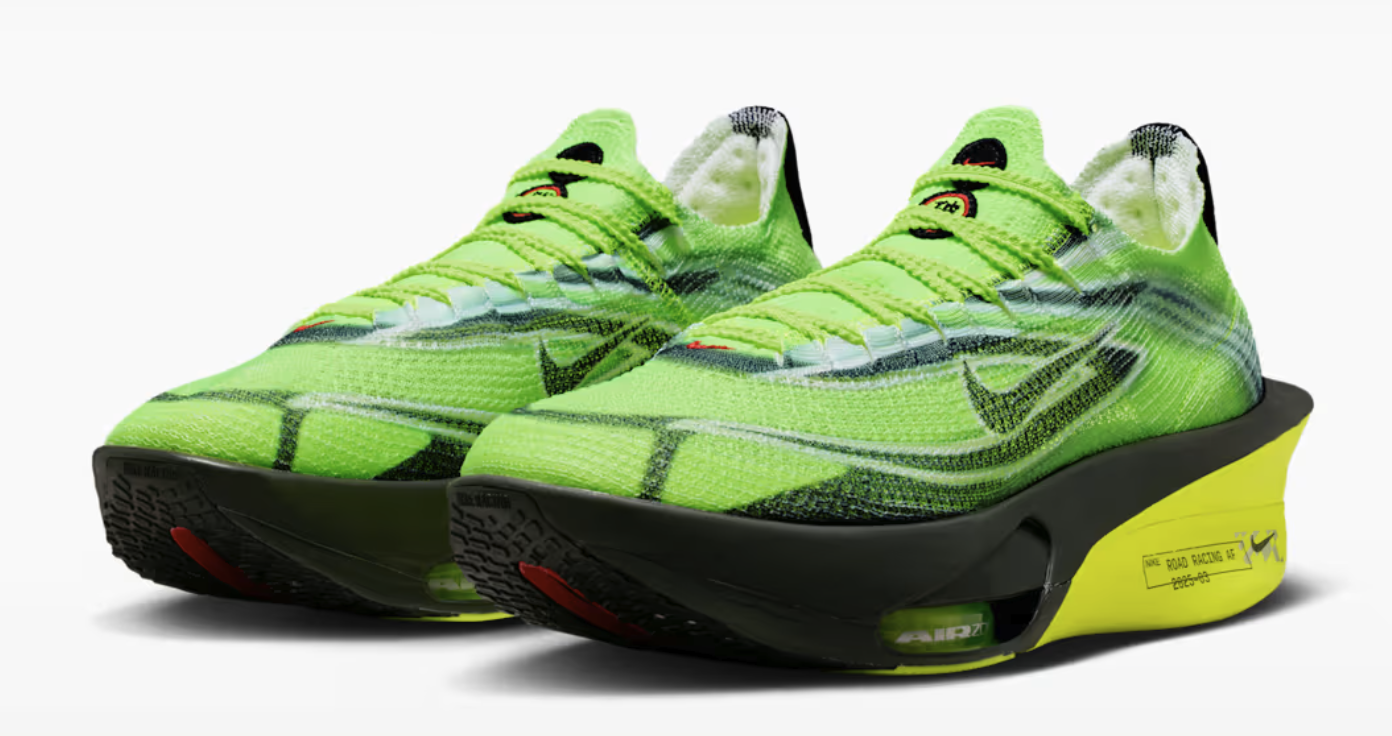
The carbon-plated, nitrogen-infused, space-age foam marvels that cost more than a nice dinner and make you feel like you're running on the concept of forward motion itself. The Nike Alphaflys. The Adidas Adios Pros. The shoes that have, quite genuinely, changed the landscape of road racing.
They are extraordinary for running.
They are not always extraordinary for HYROX.
Here's why:
The grip problem. To hit their absurdly low weights, super shoe manufacturers often strip rubber from the outsole. Less rubber = less grip. Less grip = you, sliding backward on a sled push, questioning every life decision that led to this moment.
The stability problem. Many super shoes have stack heights at or near the 40mm World Athletics maximum. That's a lot of foam between your foot and the ground. Great for a straight road. Less great for HYROX, where you're cornering, lunging, doing wall balls, and trying to get your foot under the rowing machine straps without looking like a baby giraffe learning to walk.
The money problem. Super shoes are expensive and fragile. Using them on sled pushes will chew through them fast. It's the footwear equivalent of using a sports car to move furniture.
Now - before the super shoe enthusiasts come for me - some carbon plate shoes do work for HYROX. The Puma Deviate Elite 4 and Saucony Endorphin Pro 4 are both carbon-plated and both perform well in the sport, because they've been designed (or happen to be designed) with enough grip and stability to handle the functional stations. Carbon plates aren't the problem. Inadequate grip on a carbon-plated shoe is the problem.
The Heel Counter
The heel counter - the reinforced structure at the back of the shoe that wraps around your heel - can be the difference between a smooth sled push and a maddening one. Because here's what happens with a weak heel counter: you're pushing the sled, leaning forward at a hard angle, driving through your feet, and your heel starts to lift. Slowly at first. Then more. Your foot is sliding forward inside the shoe. You're losing power. You're losing time. You're losing your will to live.
A shoe can feel perfectly secure while running and completely betray you on the sled.
The fix, if you discover this problem:
Use heel lock lacing (also called "runner's loop" or "lace lock"). This creates extra tension specifically around the heel and ankle. There are good tutorials on YouTube - it takes 30 seconds and it works.
And, ideally, test your shoes on a heavy sled push before race day. This is the recurring theme of this article. Test on a sled. Test on a sled.
Stack Height: Foam and the Nature of Compromise
Stack height is the total amount of midsole foam between your foot and the ground. More foam generally means more cushioning, more energy return, more of that bouncy "I am being gently propelled by the universe" feeling that makes long runs pleasant.
The Nike Vaporfly has a 40mm stack height. The Alphafly, 39mm. World Athletics caps road racing shoes at 40mm, which is why so many brands are pushing right up to that ceiling.
But HYROX is not a road race.
In HYROX, a very high stack height can mean:
Less stability through the tight corners on the running course. You know the ones. The ones where twenty people are all trying to take the inside line and it briefly feels like a Formula 1 start.
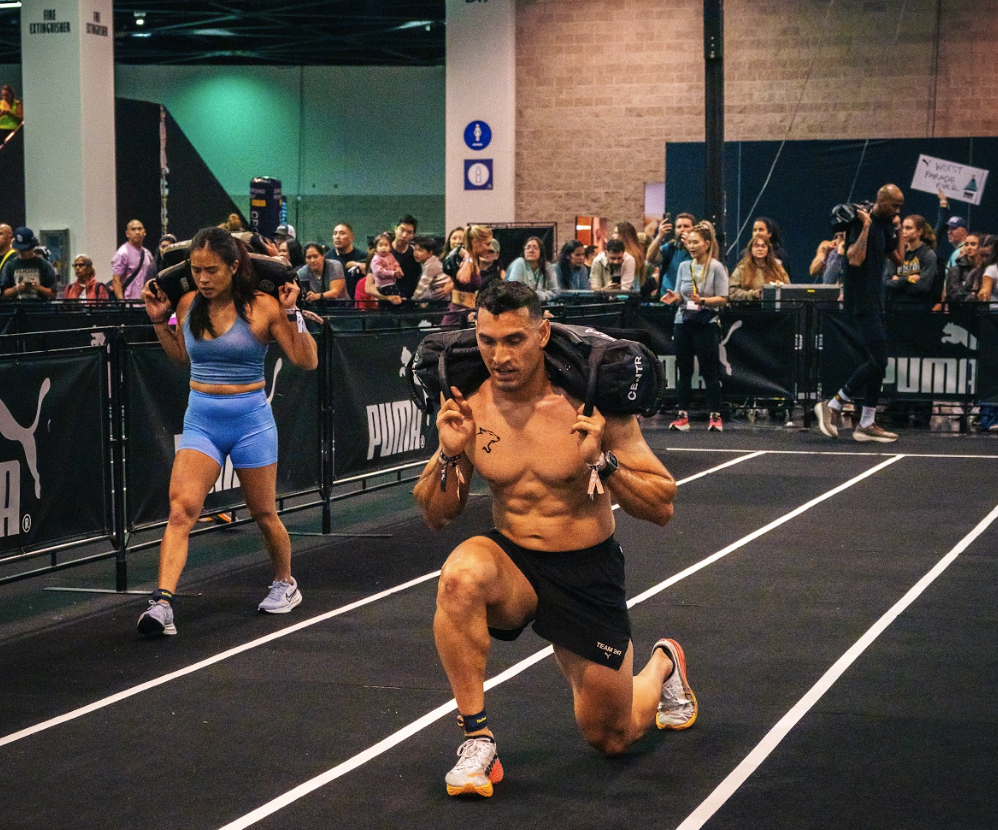
Less ground connection during lunges, wall balls, and burpee broad jumps. There's a point where you want to feel the floor, and 40mm of foam doesn't always let you.
Slower transitions - specifically, getting your foot under the straps on the rower. It sounds trivial. In a race, those seconds add up.
Here's a rough guide:
For 30–35mm Stable. Grounded. You can feel the floor. Athletes who prioritize station performance 35–39mm The sweet spot. Cushioned but controlled. Most HYROX competitors 39–40mm Bouncy. Fast. A little wobbly. Speed-chasing athletes who accept the trade-off.
Elites make that trade-off all the time. Whether you should depends on what you value and what your body tells you.
Training Shoes vs. Race Day Shoes
Many top HYROX athletes don't train in the same shoes they race in.
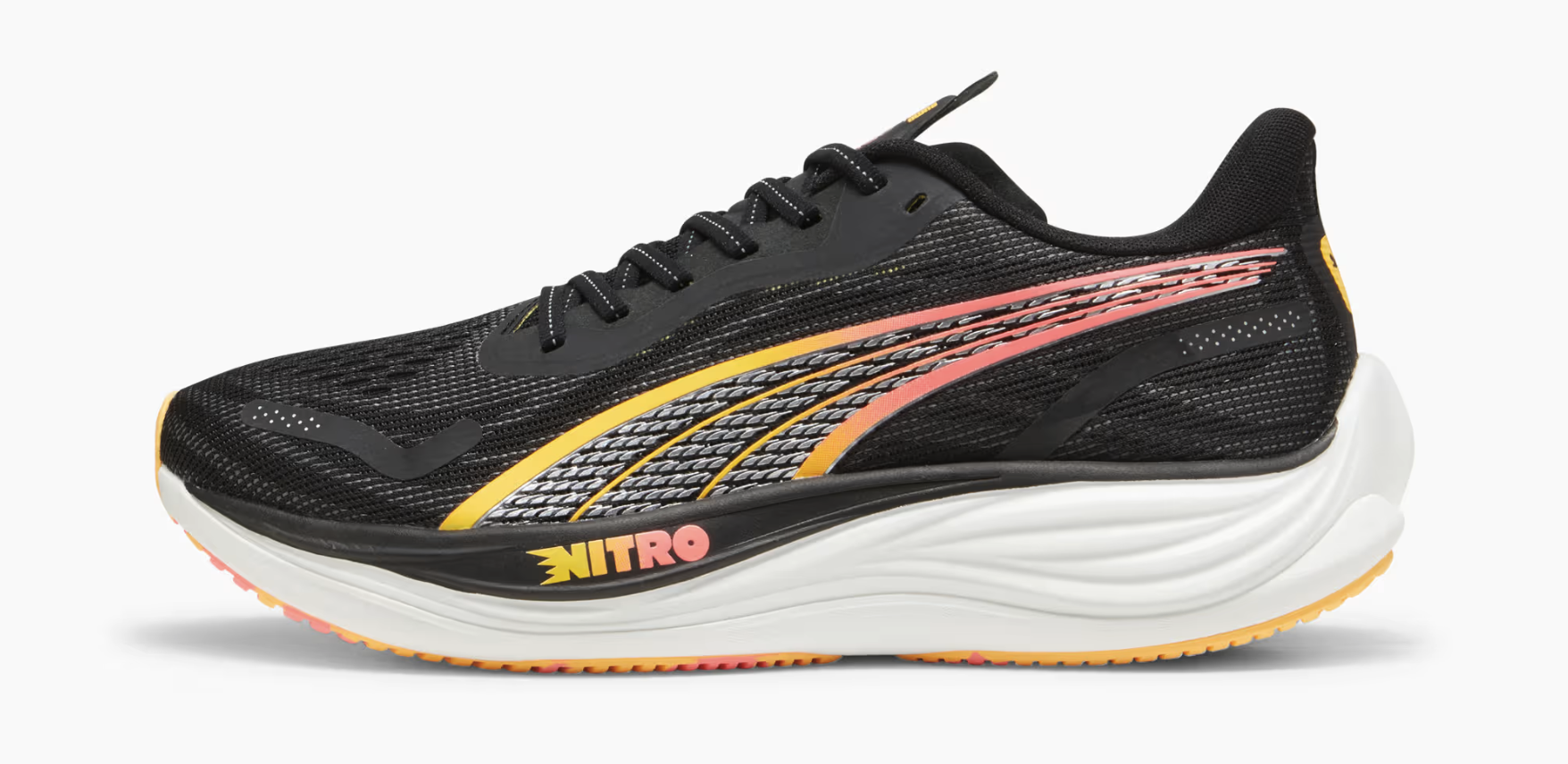
Training shoes should be durable. Cushioned. Forgiving. The kind of shoe that can absorb months of hard training without falling apart or passing the punishment on to your joints. Something like the Puma Velocity Nitro or the Hoka Mach series - reliable, comfortable, priced to replace.
Race shoes should be responsive. Light. Fast. The kind of shoe that makes you feel a little bit electric. These are your carbon-plated specials, your race-day weapons. You don't need to put 500km of training into them. You save them for when it matters.
Do You Actually Need Expensive Shoes for HYROX?
No.
Let me say that again, because the internet is very good at making you feel like you need to spend money to be legitimate:
No.
A well-fitting neutral running shoe with decent outsole grip will serve most HYROX competitors beautifully - especially for a first race. You do not need carbon plates. You do not need nitrogen-infused foam. You do not need a shoe that costs more than your weekly grocery bill.
Where premium shoes do make a difference is at the sharp end. If you're chasing a podium, if you're trying to qualify for Worlds, if you're hunting a specific time - then yes, the energy return from a carbon plate shoe can meaningfully add up over 8km of running. At that level, marginal gains matter.
But for the vast majority of us? The shoes are not the bottleneck. The training is the bottleneck. The nutrition is the bottleneck. The sleep is the bottleneck. The fact that you skipped three sessions last month because "something came up" is the bottleneck.
Get shoes with grip. Get shoes that are comfortable. Get shoes that hold your feet in place. Everything else is a bonus.
What the Top HYROX Athletes Actually Wear
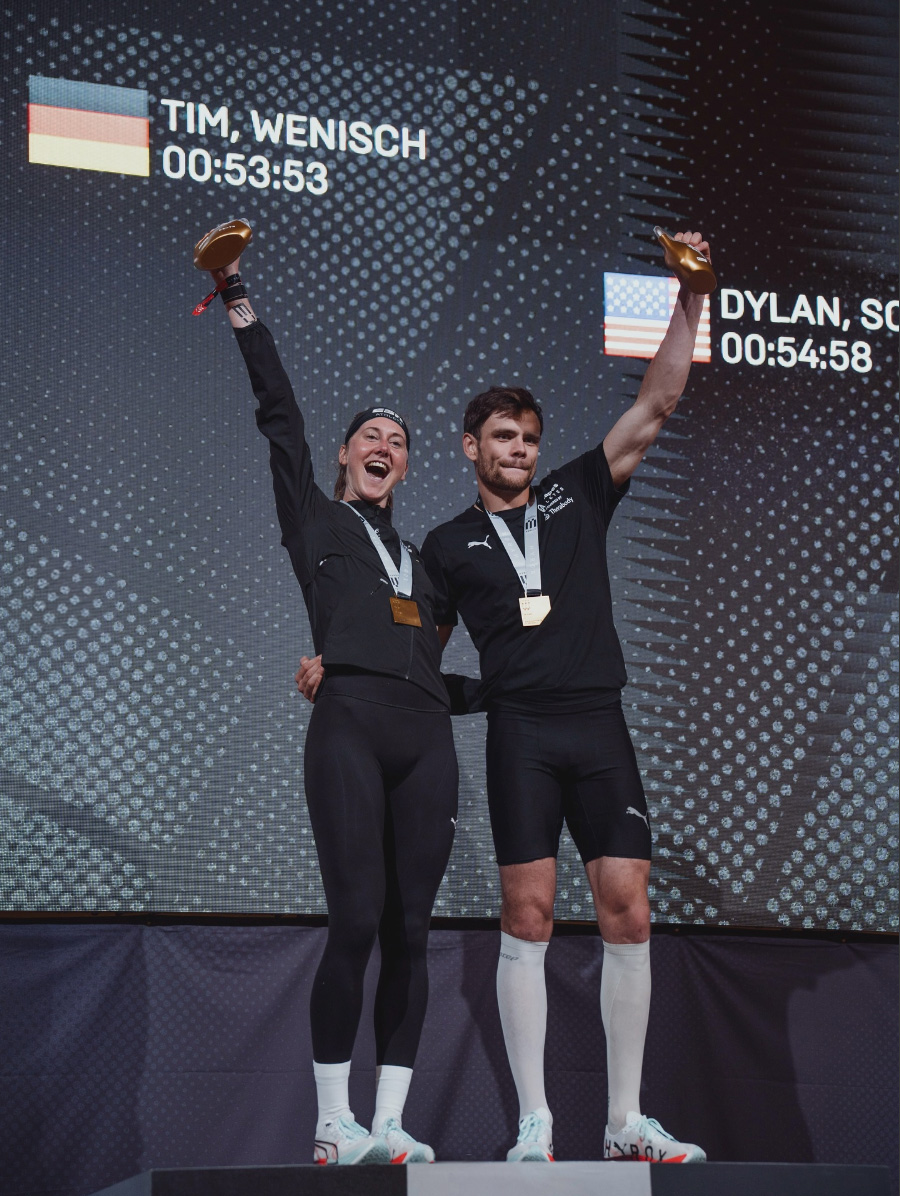
These athletes have very specific biomechanics, very specific preferences, and very specific sponsorship deals. What works for a World Champion may not work for you. Start with comfort. End with comfort. Let everything else be in the middle.
What Shoes Do Top Athletes Wear?
2026 World Champions
Dylan Scott (2026 World Champion, USA - 53:47) - Nike Hybrid Vaporfly
Alyssa McElheny (2026 World Champion, USA - 56:59) - first World Championships, first title - Adidas Boston
2026 World Championship Podium Finishers
Louis Osselaer
2nd Men, Belgium, 54:02
PUMA x HYROX Deviate NITRO Elite 4
Tim Wenisch
3rd Men, Germany, 54:04
Adidas Adizero Dropset Elite
Joanna Wietrzyk
2nd Women, Australia, 57:14
Puma x HYROX Deviate Elite 4
Sinéad Bent
3rd Women, England, 57:24
R.A.D. sponsored; seen wearing Puma x HYROX Deviate Elite 4
Other Notable Elite 15 Athletes
Hunter McIntyre
5th Men, 54:08
Puma x HYROX Deviate Elite 4
Charlie Botterill
4th Men, 54:04
Nike Streakfly; seen wearing a Nike prototype, possibly the Nike Hybrid
Alexander Roncevic
6th Men, 54:18; current world record holder at 51:59
ON Cloud X Tempo Pro
Lauren Weeks
5th Women, 58:47
Seen wearing Mizuno Wave Rebellion Pro
Calypso Sheridan
4th Women, 58:16
Nike Streakfly
Lucy Procter
6th Women, 59:05
Puma x HYROX Deviate Elite 4
Kate Davey
Saucony Endorphin Pro
Jake Dearden
Puma Deviate Nitro Elite 3 and 4
Paul Gillingham
Puma Velocity Nitro
Megan Jacoby
Puma Deviate Nitro 3 Elite
James Kelly
Puma Deviate Nitro 2 Elite
Camilla Massa
Adidas Adizero Dropset Elite
Mikaela Norman
Puma Deviate Nitro 3 Elite
Rich Ryan
Mizuno Wave Rebellion Pro
Vivian Tafuto
Saucony Endorphin Pro
Beau Wills
Nike Vaporfly
Jon Wynn
Saucony Endorphin Pro
The point of this list isn't to tell you what to buy. It's to show you something important: there is no consensus. Even at the highest level of the sport, athletes disagree. Puma appears most often - they're the official HYROX sponsor, and they make genuinely excellent shoes for the event - but Saucony, Mizuno, Nike, ON, and Adidas all show up too.
If the best in the world can't agree, you have official permission to stop stressing and just pick something that feels good.
Best Shoes for HYROX: In-Depth Reviews
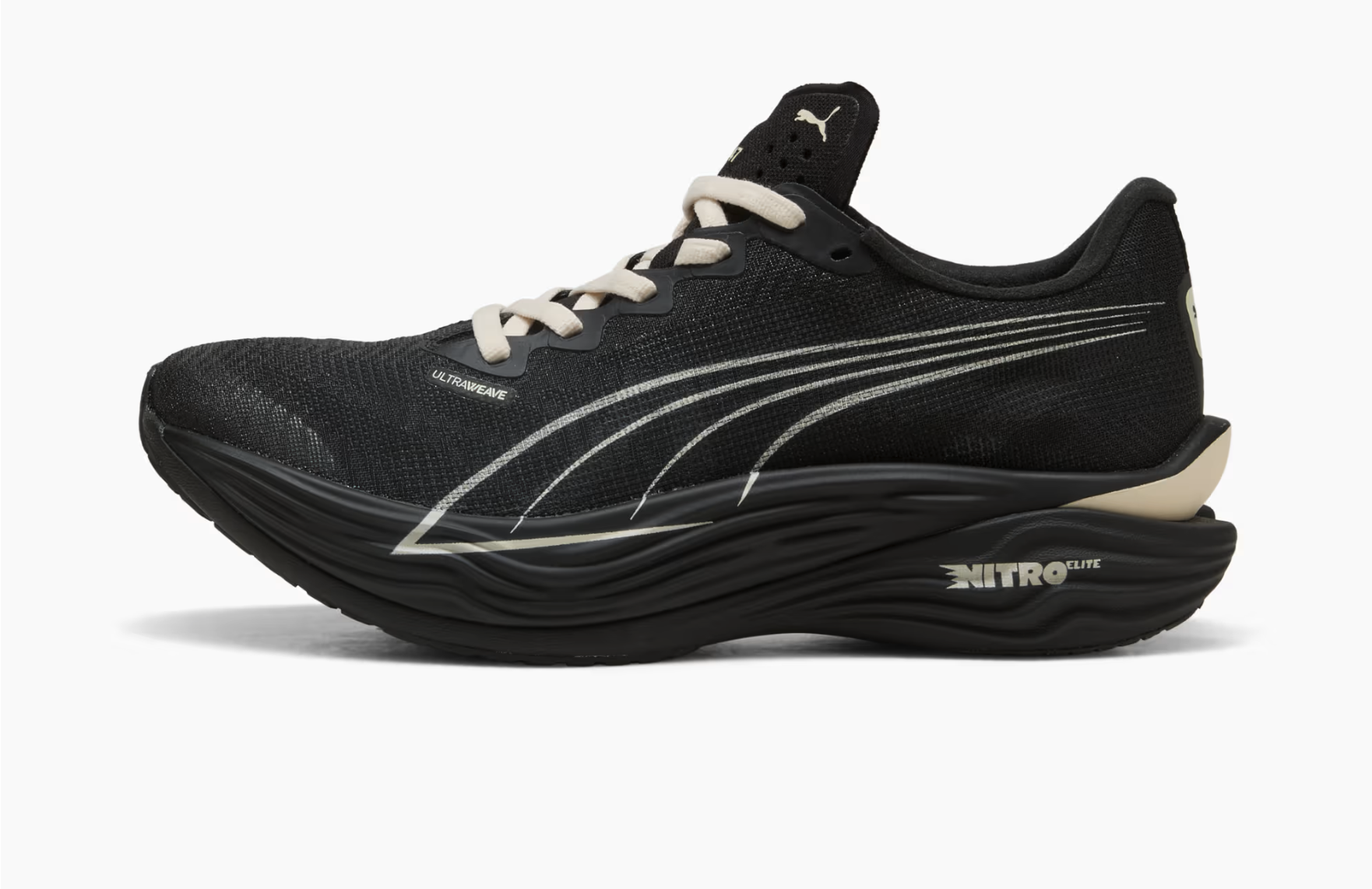
Puma Deviate Nitro 3 Elite
Best Overall Hyrox Shoe
We're sticking with our guns that these are still better that the Deviate Nitro 4.
This shoe appears on more HYROX start lines than possibly any other, and the reason is simple: it's fast and it grips.
The NITROFOAM™ ELITE midsole is responsive and snappy - it wants to go fast and it makes your legs agree. The PUMAGRIP outsole is among the best in the business for HYROX sled work. Puma even offers a HYROX-branded version, which is the same shoe with different colourways and a HYROX logo - a small thing, but it makes you feel like you belong, and sometimes that matters more than we admit.
For walking lunges and burpee broad jumps, the lightweight build and rocker geometry give strong forward drive. It's a shoe that rewards aggression.
The trade-off: The platform is relatively narrow and the stack height is high. Under heavy lateral forces, it can feel a little tippy. In HYROX, this is rarely a problem - you're mostly moving forward, not sideways. But it's worth noting.
The verdict: Still the best HYROX shoe for athletes who want elite running performance and elite grip in the same package. Yes, still over Deviate Nitro Elite 4.
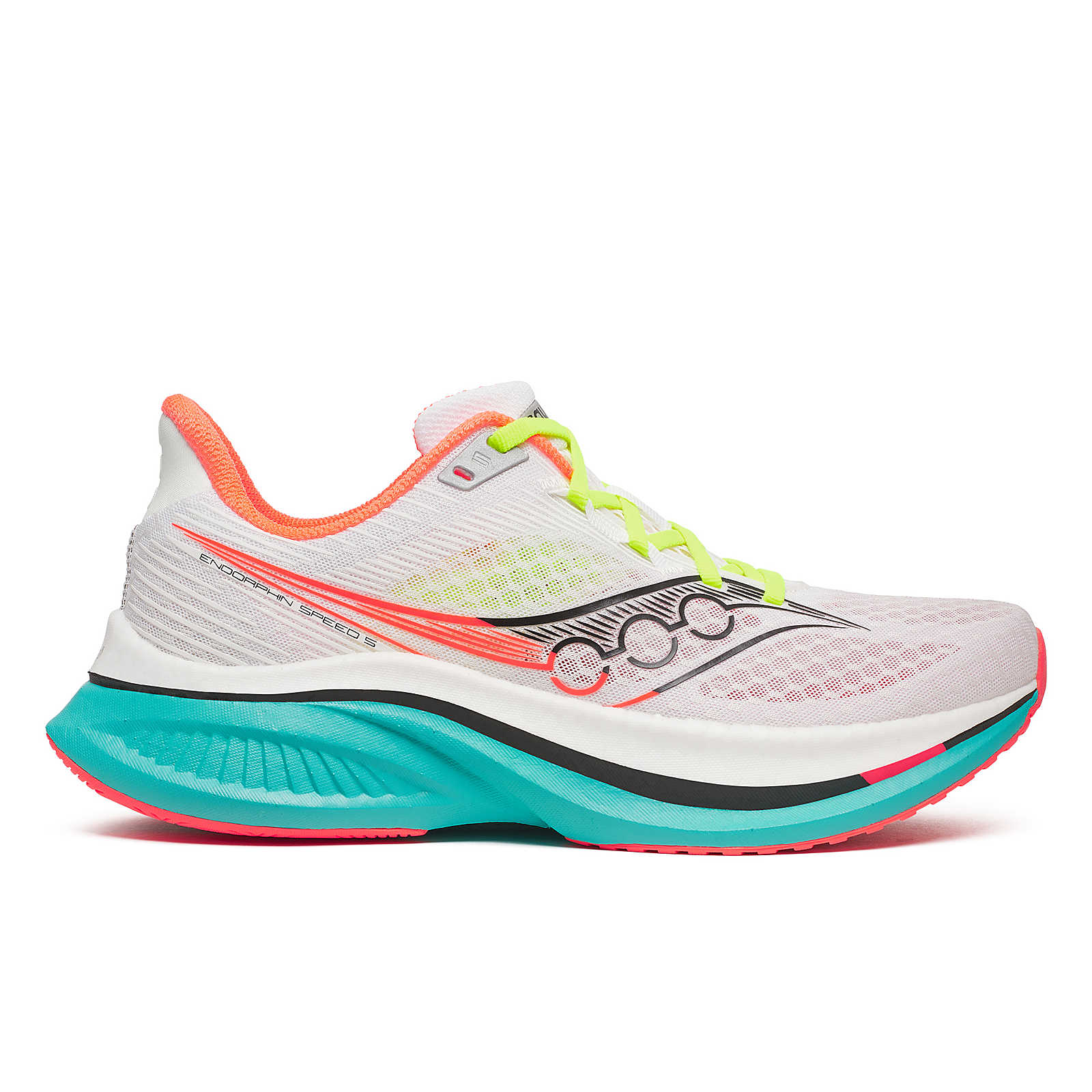
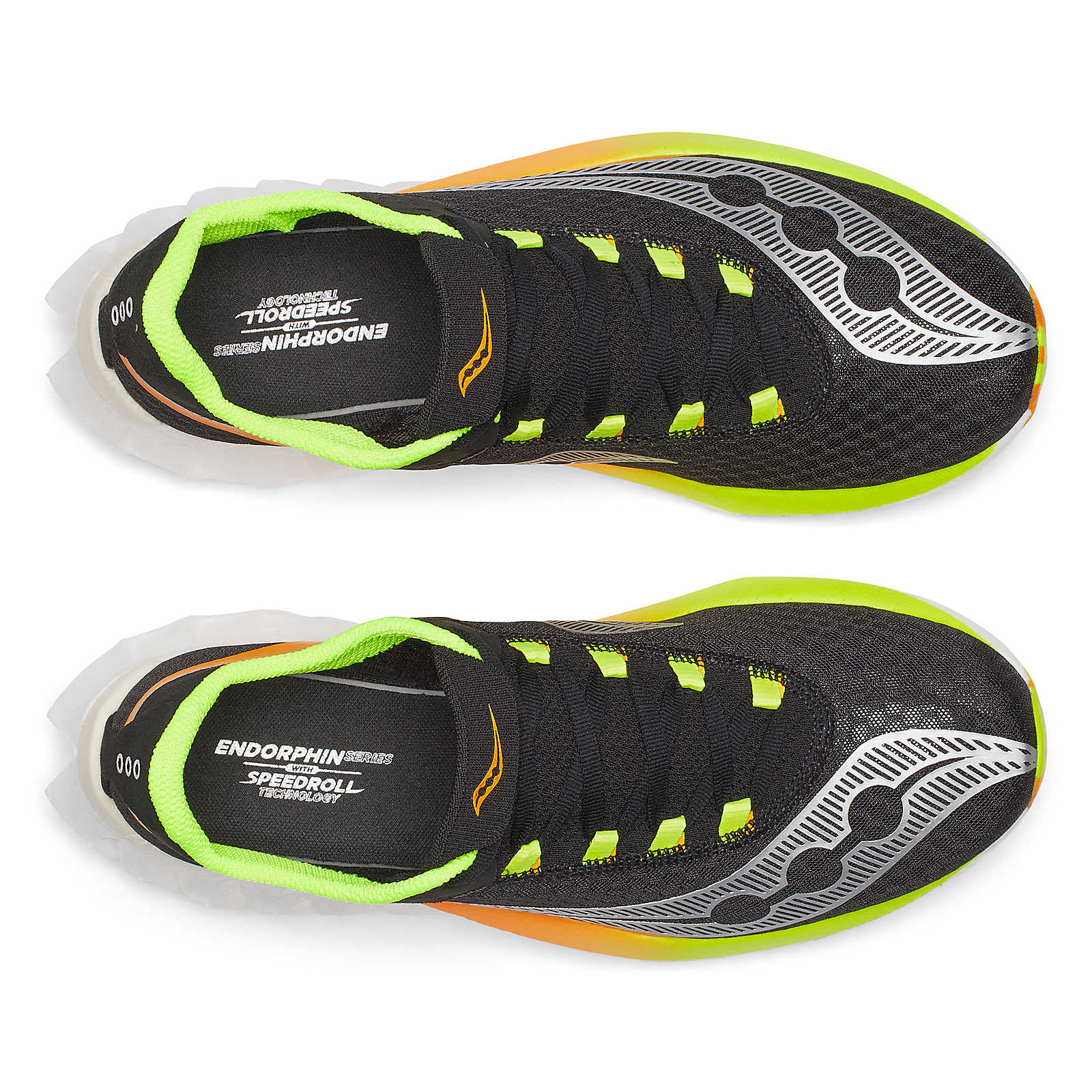
Saucony Endorphin Speed 5
Best Nylon-Plate Workhorse
If you want something that feels fast on the 1 km runs but still controlled and forgiving in the stations, the Saucony Endorphin Speed 5 is one of the strongest options right now. It keeps the “do‑it‑all tempo shoe” DNA of the earlier Speeds, but with small updates that make it smoother, a bit more supportive, and still light enough to race in
PWRRUN PB foam in a dual-layer setup. A full-length semi‑rigid nylon plate sandwiched between that foam, not carbon, so you get propulsion without feeling locked into a stiff rail. Saucony’s SPEEDROLL rocker geometry is still the star: a beveled heel and late forefoot rocker that gently tips you forward and makes transitions from heel‑strike to toe‑off feel almost automatic at HYROX paces.
What makes it interesting in a HYROX context: lab testing shows traction that’s actually better than some dedicated super-shoes, and the platform remains flexible enough that you don’t feel like you’re fighting the shoe during sled pushes, lunges, and wall balls. You get a lively, “supershoe‑adjacent” energy return, but the upper, heel counter, and plate all sit in that sweet spot where the shoe works for easy runs, tempo efforts, and race day, not just hot laps on a track.
The trade-off: it has crept up slightly in weight compared to older versions (around 8.3–8.5 oz / 237–241 g for men), and it doesn’t have the same wild, trampoline‑like bounce you’d get from a full carbon racer. Some reviewers also note it feels a touch bulkier and less “electric” than the very early Speeds, even though the overall package is still light by daily‑trainer standards.
The verdict: a true hybrid weapon for HYROX and hybrid training. Plated-shoe smoothness and speed, with grip, versatility, and enough forgiveness that you can wear it for your build‑up miles, interval sessions, and race day without feeling like you’re compromising stability in the stations.
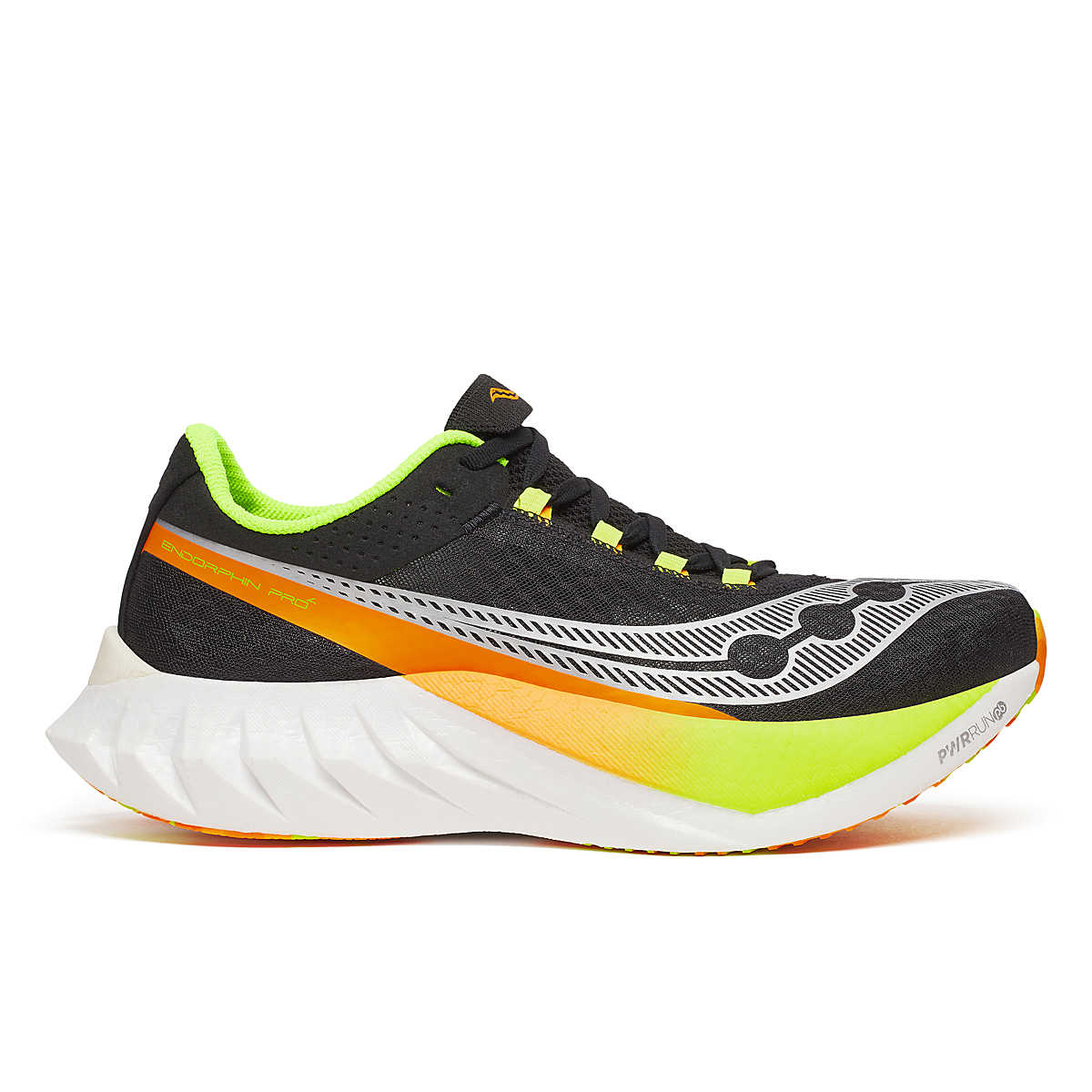
Saucony Endorphin Pro 4
Best Carbon Plate Alternative
We choose this over the Endorphin Pro 5. Another great choice, if the Puma options don't suit your foot - and shoes are deeply personal, so this is entirely possible - the Saucony Endorphin Pro 4 is where I'd point you next.
PWRRUN HG foam, Full-length carbon plate. Saucony's SPEEDROLL geometry that creates a smooth, almost automatic forward roll with each stride. It's a propulsive, efficient shoe that makes 1km repeats feel slightly less like punishment.
What sets it apart from other super shoes in the HYROX context: the grip is genuinely solid (not just "acceptable for a racing shoe"), and the forefoot platform is broader than many competitors, giving you more stability through the stations.
The trade-off: It doesn't feel quite as cushioned as the Endorphin Pro 3, which was wildly popular among early HYROX adopters. If you loved the Pro 3, the Pro 4 is a different character - more firm, more direct.
The verdict: A proper all-rounder. Carbon-plate speed with grip and stability that actually works for HYROX.
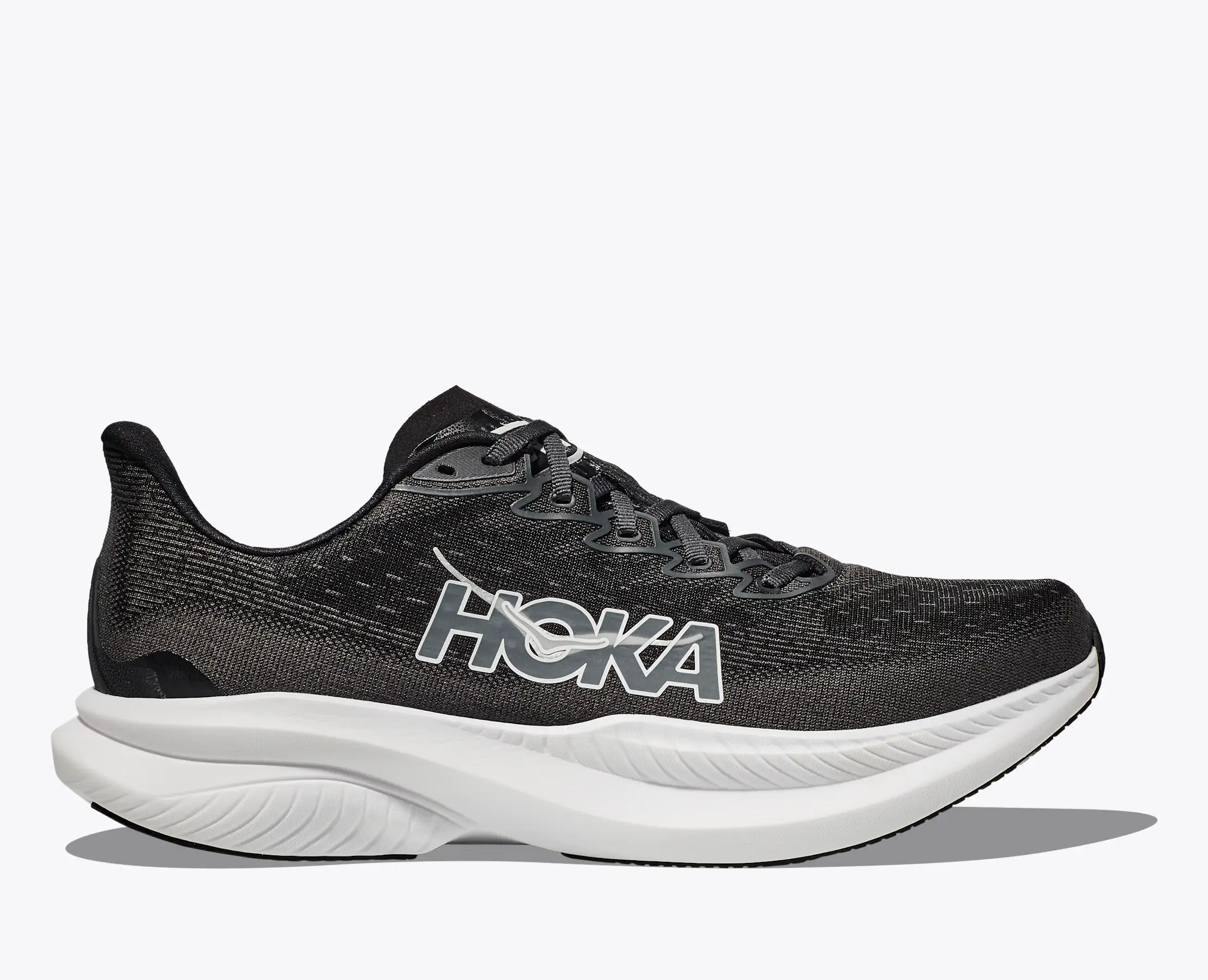
Hoka Mach 6
Best Rockered Workhorse for HYROX
If you want something light, fast, and very stable underfoot without going anywhere near a plate, the Hoka Mach 6 is one of the strongest neutral options to build HYROX training around. It takes the Mach 5 concept and turns it into a more modern “supercritical foam” trainer that can handle easy miles, tempo work, and race‑pace 1 km repeats in the same package.
Supercritical EVA‑based foam in a single slab midsole. No plate, but a distinctly rockered geometry (Hoka’s early‑stage Meta‑Rocker) that rolls you smoothly from heel to toe and makes it feel quicker than a traditional daily trainer. Stack height comes in around 37 mm in the heel and 32 mm in the forefoot (5 mm drop), with a weight of roughly 8.1–8.2 oz (men’s US 9) - very light for how much cushioning you get.
What sets it apart in a HYROX context: the platform is surprisingly stable for the stack, thanks to higher torsional rigidity and a well-shaped rocker that encourages forward momentum without feeling wobbly. Traction scores are right in line with good road trainers, which is enough for reliable grip on typical HYROX flooring, and the flexible, plate‑free forefoot lets you load lunges, burpees, and wall balls without fighting a stiff plate.
The trade‑offs: it rides firmer and more rigid than the Mach 5, and the midsole can feel noticeably harder in cold conditions. The fit skews a bit narrow/low‑volume through the midfoot, and several reviewers note that the upper can run warm on hot days, so wide‑footed athletes or heavy sweaters may want to test fit carefully.
The verdict: a rockered, super‑light workhorse that makes a lot of sense as a HYROX trainer and even race‑day option for athletes who prioritize stability and control over trampoline‑like bounce. You get speed and efficiency from the geometry and foam, but with enough firmness, grip, and torsional stiffness that stations feel planted rather than sketchy - ideal if you want a single shoe for most of your hybrid training.
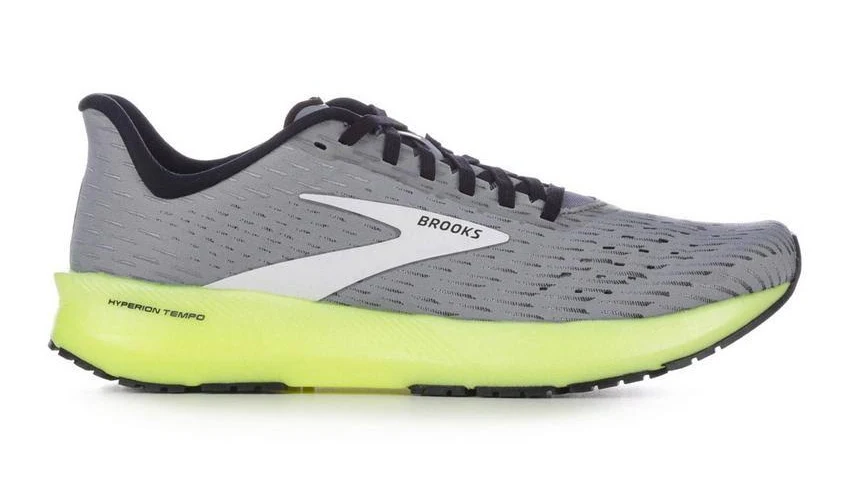
Brooks Hyperion Tempo
Best Low-Stack Tempo Option
If you want something that feels fast and precise on the 1 km runs without a plate or huge stack height, the Brooks Hyperion Tempo is a very solid Hyrox pick. It has old‑school racing‑flat vibes wrapped in a modern package: light, firm, and built to move quickly without getting in your way.
DNA Flash nitrogen‑infused foam. No plate, but a subtly rockered shape and low 31 mm / 23 mm stack with an 8 mm drop, giving you ground feel and snap rather than trampoline bounce. At around 7–7.3 oz (198–207 g, men’s US 9), it’s one of the lightest trainers in its class, designed for tempo runs, intervals, and race‑pace efforts.
What sets it apart in a HYROX context: the firm, responsive midsole and flexible forefoot make it feel stable and predictable through turns, sled work, and lunges, and the outsole has enough rubber and grip for gym floors and typical race surfaces. Lab testing shows very high forefoot energy return with good flexibility, so it works well for mid/forefoot strikers and handles both running and station movements without feeling clunky.
The trade‑offs: the ride is definitely on the firmer side, and heavier runners or those used to plush max‑cushion shoes may find it less forgiving on long sessions. It’s also not a “magic shoe” in terms of bounce - more efficient and honest than dramatically propulsive - so if you want big super‑shoe sensation, this isn’t it.
The verdict: a stripped‑down, fast, and versatile tempo trainer that crosses over nicely into HYROX training and racing for runners who value feel and control. You get speed, stability, and gym‑friendly flexibility in one package, with just enough cushioning to handle full race simulations without feeling overbuilt.
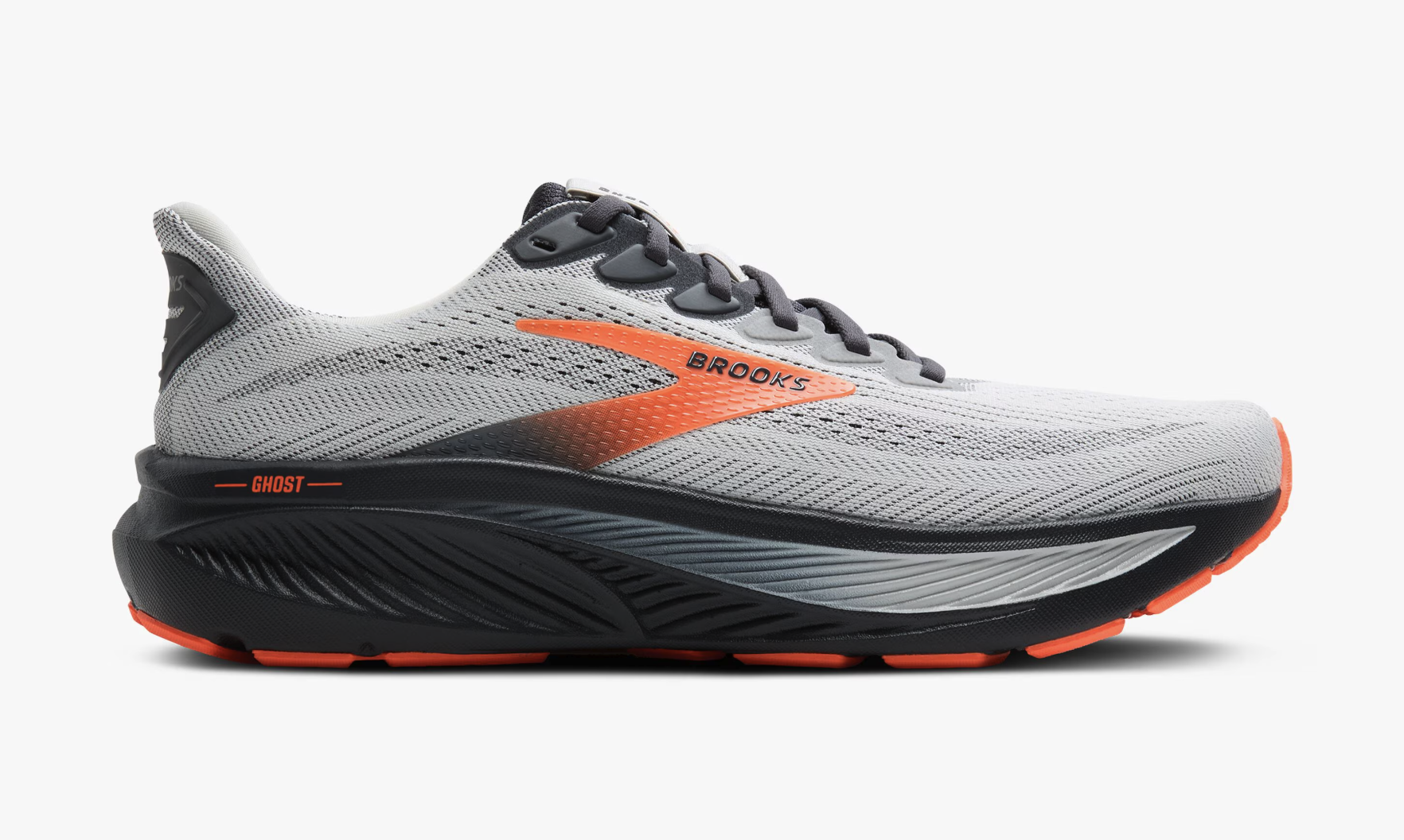
Brooks Ghost (15/16/17 line)
Best Traditional Daily Trainer for HYROX Volume
If you want a classic, comfortable daily trainer to handle most of your HYROX base miles and easy conditioning sessions, the Brooks Ghost series is a safe, proven choice. It’s built more for durability and comfort than outright speed, which is exactly what many athletes want for the bulk of their weekly volume.
DNA LOFT (now v3, nitrogen‑infused in newer versions). High‑drop, neutral platform (around 10–12 mm) with a mid‑30s mm heel stack and moderate forefoot stack, giving plenty of cushioning, especially for heel strikers. Weight sits roughly around 9.4–10.1 oz for men depending on version, squarely in daily‑trainer territory.
What sets it apart in a HYROX context: it’s incredibly consistent, with a stable platform, durable outsole, and forgiving ride that works well for long aerobic runs and mixed conditioning days. The flexible forefoot and well‑padded, stiff heel counter provide a secure, guided feel under load, making it a good option for sled practice, carries, and general gym work when you don’t need race‑level turnover.
The trade‑offs: it’s not particularly exciting or fast; energy return is improved in the Ghost 16 but still moderate compared to tempo shoes and super‑shoes. The high drop can be great for heel‑strikers or calf‑sensitive athletes, but mid/forefoot strikers might find it a bit much, and the extra weight makes it less ideal as a primary race shoe.
The verdict: an easy‑day and long‑run workhorse that pairs well with a faster shoe like the Hyperion Tempo or a plated racer for HYROX race day. Use the Ghost to soak up mileage and strength sessions comfortably, then switch to something lighter and snappier when it’s time to simulate or race.
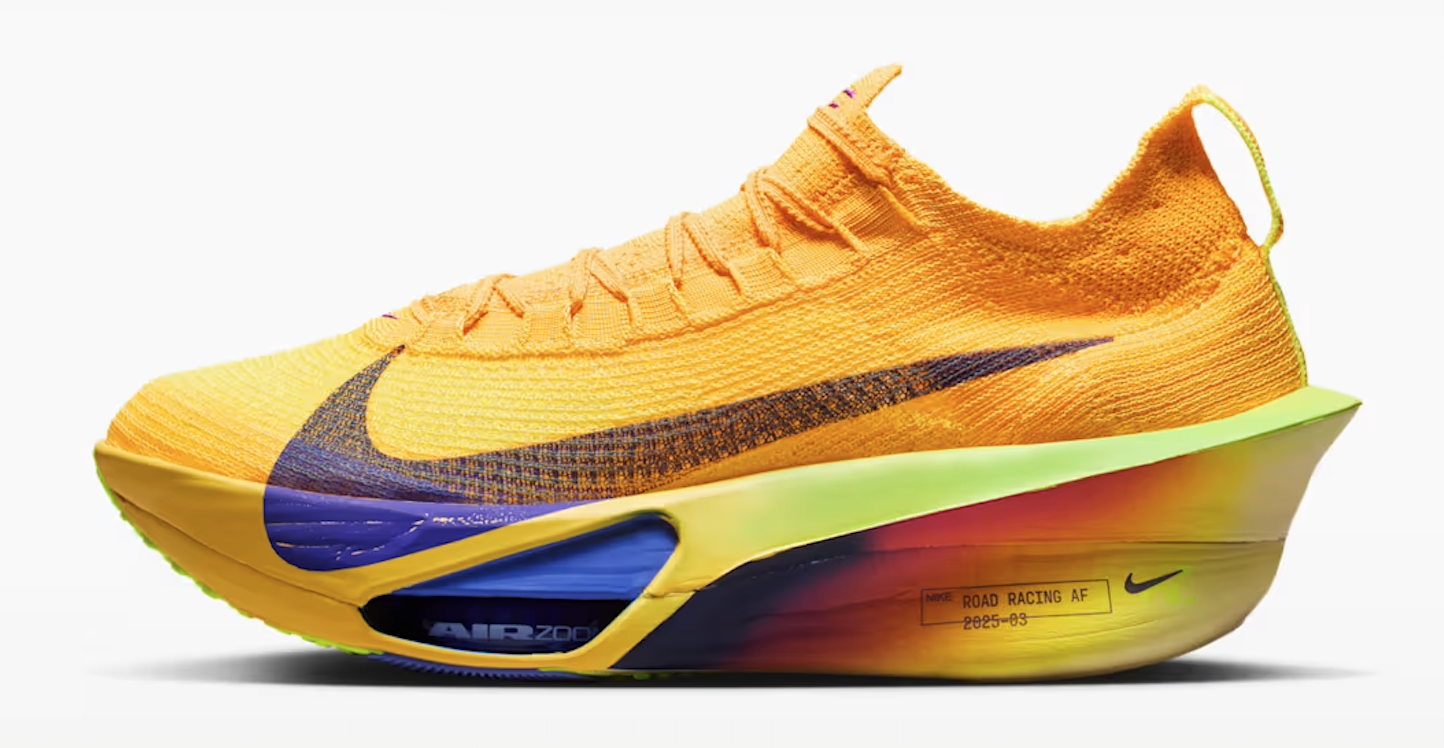
Nike Alphafly 3
If you’re willing to prioritize maximum speed on the 1 km repeats and accept some compromises in the stations, the Nike Alphafly 3 is about as aggressive as it gets. It refines the original Alphafly concept into a lighter, smoother, more stable‑for‑a‑super‑shoe package that a lot of reviewers call the best Alphafly yet.
ZoomX foam, dual Zoom Air pods in the forefoot, and a full‑length carbon Flyplate, all sitting on an 8 mm drop with roughly 40 mm in the heel and 32 mm in the forefoot. At around 7.0–7.1 oz (men’s US 9), it’s impressively light given the stack, and the continuous midsole (they filled in the gap around the pods) makes transitions noticeably smoother than earlier versions. The geometry is all about forward motion: a sharp forefoot rocker and high bending stiffness that make it feel like it wants you at race pace.
What sets it apart in this HYROX context: the energy return is outrageous, and most testers report that it helps them hold pace deeper into races and longer efforts when their legs would normally fade. The widened base, sidewalls, and central groove make it more stable than the original Alphafly and lighter than the Alphafly 2, so for strong mid/forefoot strikers the shoe feels surprisingly controlled in straight‑line running and mild curves. Traction under the forefoot is improved versus early Nike supers and is now “good enough” for most dry surfaces.
The trade‑offs: it’s still a tall, neutral race tool with limited forgiveness in sharp turns or very slick conditions; reviewers repeatedly warn that stability around tight 90‑degree corners is “treacherous” at 5K/10K speeds. The ride is firm‑bouncy rather than soft, the price is at the very top end, and late‑race comfort can be an issue for some runners who prefer a more forgiving platform. It’s also not designed with multidirectional gym work in mind, so sleds and lunges will feel sketchier than in lower, flatter shoes.
The verdict: a pure race‑day missile. If your HYROX strategy is to absolutely maximize the running segments and you’re confident in your balance, foot strength, and station mechanics, the Alphafly 3 can give you a real edge in speed and fatigue resistance. If you value stability, cornering confidence, and comfort in the stations more than raw pace, it’s a spectacular shoe - but probably better reserved for your road races than as your primary HYROX weapon.
Coach Daniel's Pick:
Saucony Endorphin Pro 4
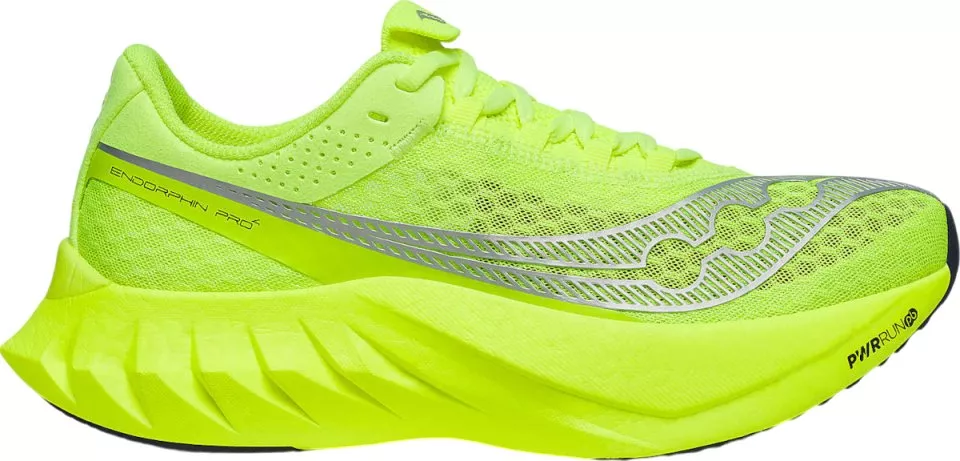
With multiple races and impressive finishes under his belt, these are his number 1 choice. These shoes provide the perfect balance of speed, stability and value. If you're looking for an all around shoe, this is the recommended choice.
Honorable Mentions: Puma x Hyrox Deviate Elite 4, Nike ZoomX Vaporfly NEXT% 3, Adidas Adizero Adios Pro 4, Adidas Adizero Boston 13, Asics Magic Speed 4, Asics Novablast 4, New Balance FuelCell Rebel v4, New Balance SuperComp Trainer v3, On Cloudmonster 2, Reebok Nano X4
Frequently Asked Questions About HYROX Shoes
Can I wear CrossFit shoes for HYROX? You can. You shouldn't. CrossFit shoes like the Nike Metcon offer excellent grip and stability for gym work, but they're not built for 8km+ of running. You'll feel it by the third run segment. Running shoes are the move.
Are Nike Vaporflys good for HYROX? Some elites use them (Beau Wills, Dylan Scott). They're phenomenal for running. The concerns are grip (limited rubber on the outsole) and stability (40mm stack through tight corners). If you go this route, test them on a sled push first. If they grip well enough for you, they're a very fast option.
What matters more for HYROX: grip or running speed? Grip. It's not close. A lack of traction on the sled push can cost you 30–60 seconds per sled. The speed difference between a good shoe and a great shoe over 1km of running is maybe a few seconds. Do the math. Grip first, speed second.
Do I need to buy HYROX-branded shoes? No. Puma's HYROX-branded Deviate line is excellent, but it's not magic. Any running shoe with good grip, a secure heel counter, and appropriate stack height will serve you well. The branding is nice. It's not necessary.
How do I test if my shoes have enough grip? Find a sled. Load it heavy - heavier than you think you'll face in the race. Push it. If your feet slip, you need different shoes. This is the simplest, most reliable test there is.
Should I have separate shoes for HYROX training and race day? If you can afford it, yes. Train in something durable and cushioned (like the Puma Velocity Nitro). Race in something responsive and fast (like any of the shoes reviewed above). Your training shoes protect your body. Your race shoes unlock your speed.
The Final Word:
The right footwear for HYROX matters. But it doesn't matter as much as your training. It doesn't matter as much as your sleep. It doesn't matter as much as showing up, consistently, and doing the work that the version of you who signed up for this event was hoping you'd do.
Get shoes that are comfortable for 8km+. Get shoes with grip. Tie them well. Test them on a sled.
And then stop thinking about shoes and go train.
Quick Pick: Best HYROX Shoes by Athlete Type
First HYROX / budget-conscious: A reliable neutral running shoe with good grip (e.g., Puma Velocity Nitro)
Competitive racer: Puma Deviate Nitro 3 Elite or Puma x HYROX Deviate Elite 4
Maximum running speed: Nike Alphafly 3 or Nike Vaporfly (test grip first)
Best all-around value: Saucony Endorphin Pro 4 ( People claiming Adidas Adizero EVO SL are best budget are wrong as they do not have enough grip and stability )
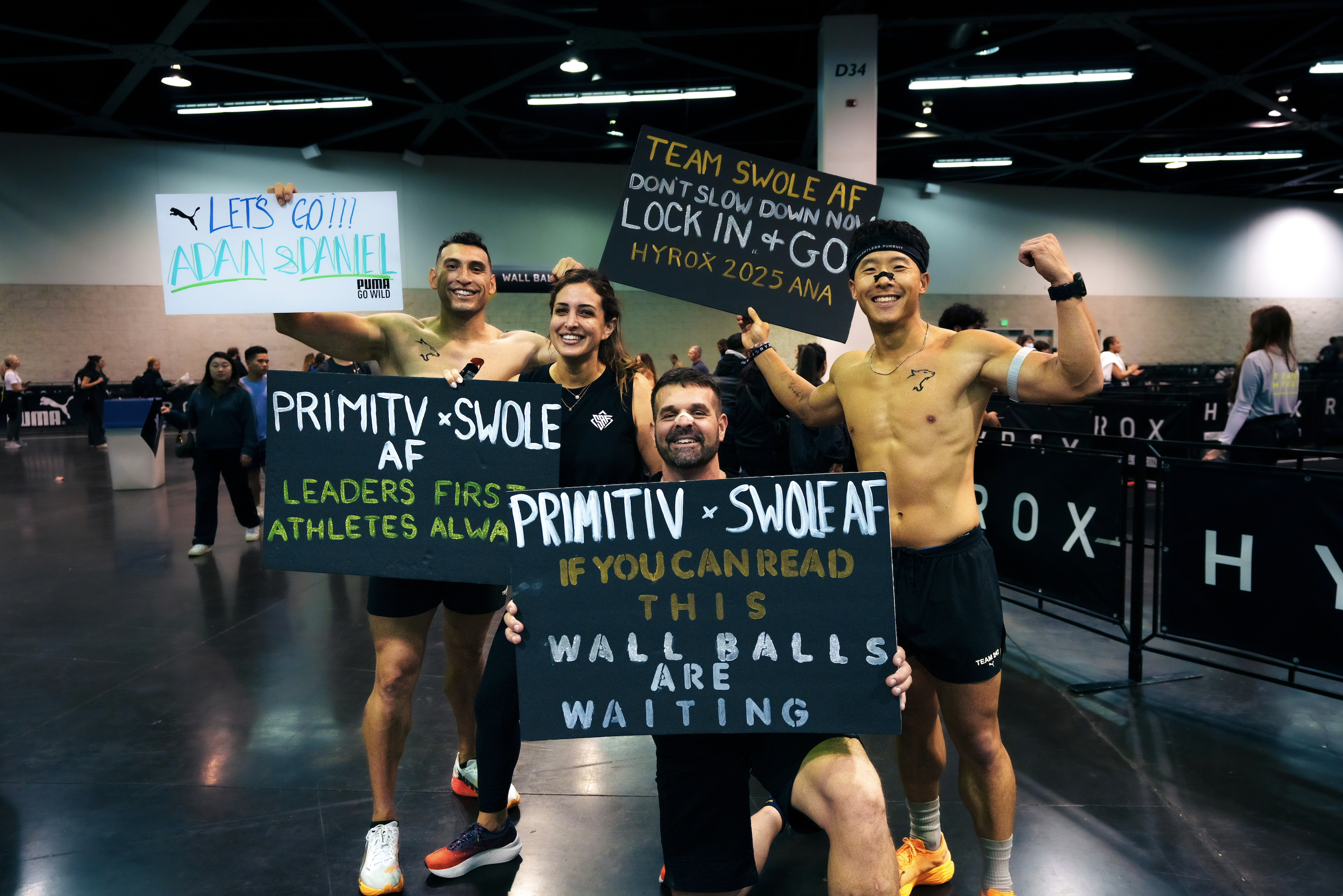
At Primitive x SwoleAF in Garden Grove, we run HYROX-specific programming every single week. Sled pushes. Sled pulls. Rowing. Wall balls. Lunges. All of it. Coached. Structured. With people who are training for the same thing you are.
Your first class is free. No commitment. No pitch. No "let me talk to my manager" nonsense. You show up, you train, you decide if it's for you.
If it is - welcome. If it's not - you still got a free workout and you leave better than you came in. There is literally no downside.